
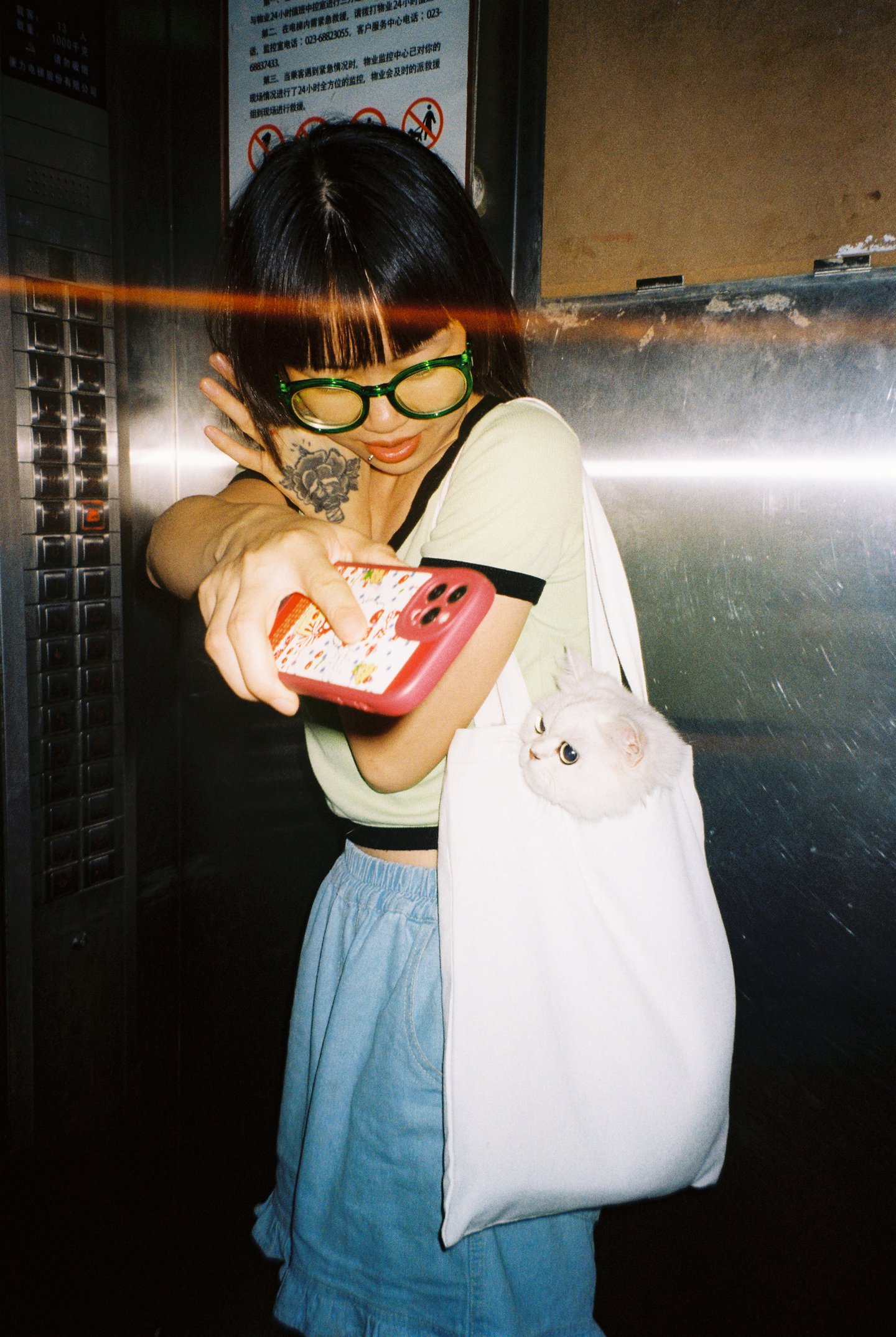
Returning to the optimistic perspective in which Signs of Life was curated, it seems that this return to personability is equally happening on the creative production side as well, with more work not needing to optimally perform on-screen. “It isn’t crafted for the algorithm or for metrics; it isn’t performative,” Genevieve says, “there’s a tone and timbre to creative work that comes from personal curiosity, instinct, and expression,” something made because it needed to be expressed, not commissioned. It’s clear that brands are now beginning to tap into that expression, using imagery that’s not directly relevant to the product, and instead looking to forge a mood or sensibility. As Genevieve puts it, “a proximity to an artistic worldview.” As a result, brand worlds are seeming more and more editorial. “Instead of shouting ‘look at us’, it’s saying, ‘here’s the world we believe in’,” she says, “and that, right now, is resonating more deeply than traditional brand-forward visual strategies.”
More of Genevieve’s predictions for the trends in the coming years also speak to this notion, deepening the human-centred narratives that creatives are turning to, including sincerity. Here, Genevieve sees “emotion, intimacy, and candour becoming even more central to visual culture”. Similarly, under what the report labels Creative Ferality, we could expect a pivot towards the undomesticated, whereby “wildness, unpredictability, and instinctive making as antidotes to computational workflow”. There are flavours of this untamed perspective in the report’s Body High insight, where we’re seeing more skin and sweat than ever before. Under a tentatively spiritual idea of free-living, indulgence and baring one’s body, the recurrence of real world social rituals – be it dancing, eating, indulging, running – speak again to our reaction against the digital; living more presently, anti-scrolling, non-optimised, perchance, a post-digital society.