
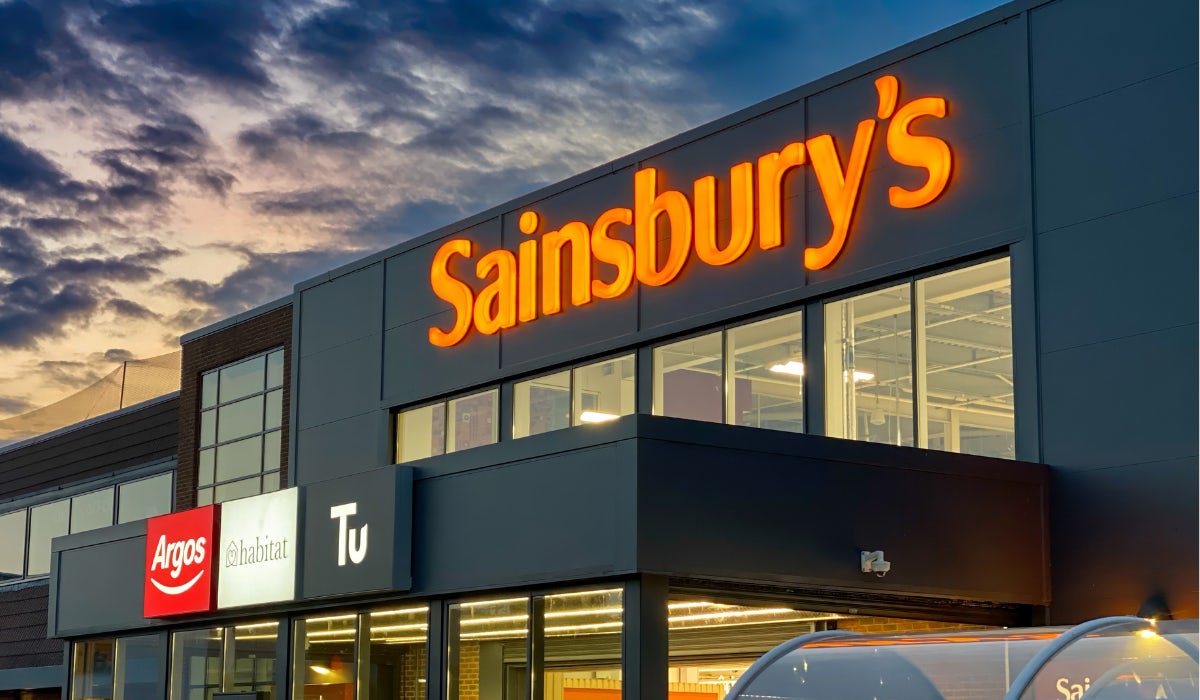
Sainsbury’s has seen another strong Christmas, winning market share for the sixth consecutive year, putting this down to customer engagement and a “winning combination of value, quality, service and availability for customers”.
In a call with the media today (9 January) CEO Simon Roberts told Marketing Week that its marketing over the Christmas period helped solidify its success.
Sainsbury’s has seen another strong Christmas, winning market share for the sixth consecutive year, putting this down to customer engagement and a “winning combination of value, quality, service and availability for customers”.
In a call with the media today (9 January), CEO Simon Roberts told Marketing Week its marketing over the Christmas period helped solidify its success.
“You can’t deliver this kind of outperformance to the market unless we get real cut through with customers in terms of our marketing and digital content, and we had a really strong plan this Christmas,” said Roberts.
Sainsbury’s brought back the BFG for its 2025 Christmas campaign, with marketing director, Radha Davies, telling Marketing Week the festive campaign was the “climax of this year’s work” around value. This also follows Argos, which is owned by Sainsbury’s, bringing back brand mascots Connie and Trevor for its Christmas campaign.
“The marketing team did a great job researching for customers up front, and it really landed well. So, in Sainsbury’s and in Argos, both campaigns delivered really strong traction in the market, and we got really good share of voice as a result,” he added.
Sainsbury’s chief technology, data and marketing officer Mark Given is Marketing Week’s 2025 Marketer of the Year.
In Sainsbury’s third quarter period (16 weeks to 3 January), its sales grew 4.9% year-on-year to £8.43bn, with a 5.4% growth in grocery but a 1.1% decline in general merchandise and clothing. Online grocery sales grew 14% over the quarter, with basket size also growing.
“We were the only grocer to see customers put more items in their basket this Christmas. And that was real evidence, I think, of the confidence customers had in the strength of our offer within that,” said Roberts.
On the growth of online, he said the grocer saw “one of the biggest step ups in the quality of customer satisfaction” for the online grocery service.
In the six weeks to 3 January specifically, Sainsbury’s sales grew 4.6%, encompassed by a 5.1% growth in grocery and a 1% decline in general merchandise and clothing. The grocer also saw “record-breaking” performance in convenience, particularly within fresh categories.
Argos saw a slight dip in success, as sales declined 1% in Q3 to £1.59bn and dipped 2.2% year-on-year in the Christmas period.
Value investment
Sainsbury’s is currently two years into its three-year strategic ‘Next Level’ plan, which was set out in 2024 and has four pillars: food, Argos, Nectar Prices, and saving and investing.
Part of this has included investment in price and value through Nectar Prices and the Aldi Price Match scheme, with 10,000 products available on Nectar and the Aldi scheme the “biggest in the market”.
The grocer says its personalised Your Nectar Prices resonated during the “peak Christmas week” where 20% more turkeys were sold than the year prior, and more customers were choosing Sainsbury’s for their big shop.
Through personalised Your Nectar Prices and regular Nectar prices, customers saved an average of £27 on their big Christmas shop, with “record Nectar participation” in the key Christmas weeks. Some two million shoppers also redeemed points worth an average of £25 during December.
You can’t deliver this kind of outperformance to the market unless we get real cut through with customers in terms of our marketing and digital content, and we had a really strong plan this Christmas.
Simon Roberts, Sainsbury’s
The brand’s Taste the Difference range was also the “fastest growing premium own label in the market”, during a Christmas where sales of supermarket premium own brand ranges exceeded the £1bn milestone for the first time, according to Worldpanel by Numerator.
More than 260 new Taste the Difference products were launched in the quarter, with mini wagyu cheeseburgers one of the items favoured by shoppers, with Roberts saying customers are “trading up”.
Like Aldi and Lidl, Sainsbury’s also saw fresh food sales increase by 8% during the quarter, with Taste the Difference fresh sales growing by 15%. It also saw “best ever” sales on mince pies, “some of the biggest ever volume growth” in confectionary, and a growth in the low alcohol category, alongside fibre-based products, according to Roberts.
Looking ahead to 2026, Roberts said its position on value is “not going to change” as they’re aware customers “look for confidence in where they can get great value for money at this time of year when it really matters”.
“Price is at the very heart of customers trusting our value proposition. And as we come into the new year, if you’re in store today or looking online, you’ll see the strength of the value delivered in food, which is really underpinning our volume growth there,” he added.
Argos investment
The retailer puts the dip in Argos down to “a tough and promotional general merchandise market and weak consumer confidence”, particularly in regard to bigger ticket items, but is continuing to invest in the business.
“The market saw a more subdued Christmas,” said Roberts on general merchandise.
Argos app numbers are still up 33% year-on-year, with improved brand perceptions across value, quality and overall satisfaction. It also gained share and grew sales within homewares, electricals and toys, with Habitat sales up 6%.
Elsewhere, Tu Clothing achieved “a strong performance within a weak market”, including a “record sale of Christmas pyjamas”, where volume growth outperformed the clothing market by 10 percentage points.
In November, Roberts said Tu saw a 7.8% increase in sales, as the brand used TikTok for the first time to highlight its Christmas pyjama range.
“It’s been brilliant actually to get some really good connection in the digital social media space of customers, and the feedback and the interest in our Christmas pyjamas already is very high,” said Roberts at the time.
Within the Nectar360 retail media business, the company also connected 800 brands to its customers, and it remains ahead of its plan to deliver at least £100m incremental profit over the three years to March 2027.
Recent developments in Nectar360 have also included a partnership with Deliveroo, enabling customers to earn Nectar points when they shop with Sainsbury’s through the Deliveroo app.
The Group continues to expect to deliver a retail underlying profit of £1bn and is also making “good progress” against its target to deliver £1bn of cost savings by March 2027 through its ‘save and invest to win’ scheme.