
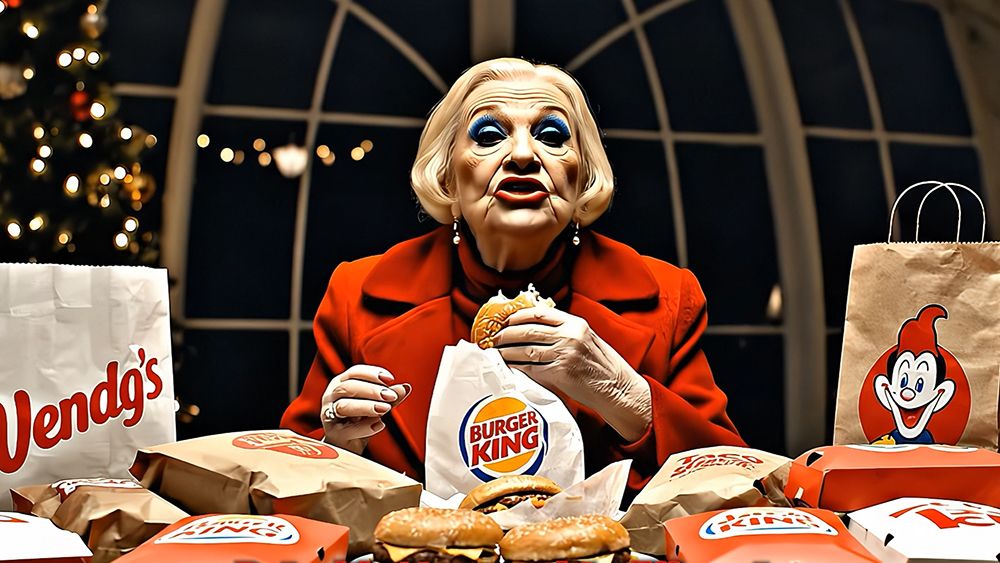
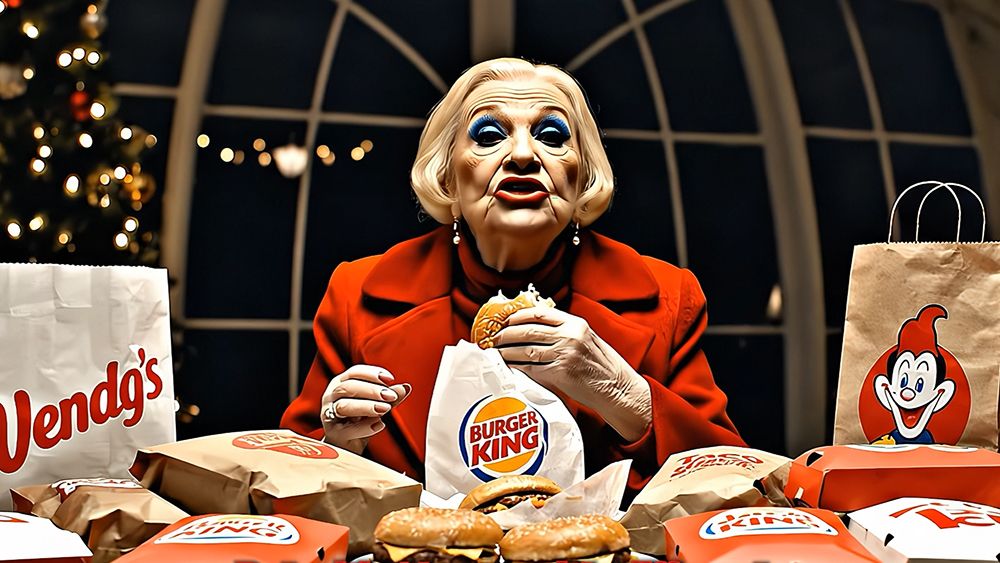
Whether we like it or not, AI is permeating almost every aspect of our lives, including the world of advertising. While some audiences remain sceptical about the technology, AI ads are becoming increasingly popular, with huge global brands like McDonald’s and Samsung receiving criticism for their artificially augmented campaigns.
But is this shift a sign of decline, or inevitable evolution? To make sense of this changing advertising sphere, I caught up with Tom Williams, global creative director at digital growth agency Incubeta, to discuss the fine balance of human and AI power shaping the future of advertising.
What’s the worst AI ad you’ve seen and why didn’t it work?
My least favourite AI ad has been McDonald’s Netherlands 2025 Christmas ad ‘The most terrible time of the year’ (which was subsequently pulled). The video generations themselves weren’t truly awful, but they clearly lacked the spirit of a practical production. Camera actions and model movements were a little janky, and the whole thing gave off ‘Uncanny Valley’ vibes.
THE infamous AI McDonald’s Ad in Full – YouTube
It missed the mark because it seemed to lack intent. I can’t tell if they were going for realism or wanted it to be clear they had used GenAI instead of CGI or VFX. I think that ambiguity led to a disconnect with their audiences. Furthermore, the overall lack of visual coherence made the narrative, which felt negative at best, difficult to follow. This was compounded by a questionable cover of Andy Williams’ ‘It’s the Most Wonderful Time of the Year,’ which tries to fit in far too many syllables for its own good!
You may like
Coca-Cola’s Christmas ad (both of them…they’ve made two now!) also gets an honourable mention. AI allows us to do things never before possible, or cover gaps in budget and time. None of these issues should plague the drinks giant, so it is sad to see they used such a powerful tool to simply replicate what they have always done… albeit with worse quality than when they used practical effects (which they clearly can afford).
(Image credit: Coca-Cola)
What’s the best AI ad you’ve seen and why did it work?
I think one of the best and first uses of genAI in a commercial ad was last year’s ‘Original Source – Nature Hits different.’ This was a perfect blend of traditional production, supplemented with GenAI visuals, to create over-the-top effects that resulted in a crazy, immersive experience representing the smells and invigorating sensations of using Original Source. It’s intentional and plays into the sometimes hallucinogenic nature of AI generations. They’re not scared of, or trying to hide, the fact that they have used this tool in the ad; Therefore, audiences don’t feel misled, so they are happy to go along for the ride.
Only brands with soul will thrive in the AI slop-era
A notable mention was this spec ad for Liquid Death – ‘Pulled Over’, which again leans into the absurdity of AI and uses it to push the boundaries of what was usually creatively possible. It also stays true to the brand’s disruptive spirit and tone. The quality of GenAI video has greatly improved since then, but it’s still consistent enough for the audience to focus on the silly, somewhat macabre narrative at the heart of the ad. And that’s the point: the assets are driven by the story, not the tools used to create them. AI should empower creativity; it’s not a replacement.
Tom praises Original Source’s use of AI to create absurd and engaging visuals. (Image credit: Original Source)
Why are some audiences so opposed to AI advertising?
I don’t think audiences are inherently opposed to AI, as long as it serves a purpose and remains authentic. There will always be initial resistance to something new, but if the quality and standards remain at the levels audiences and clients expect, it means they can focus on the message, not the tools used to create it. And there already seems to be a shift towards more acceptance of AIGenerated content as it becomes more commonplace.
What audiences don’t like (and never have) is being misled. This is why the pursuit of consistency and accuracy around products and their RTBs in AI-generated assets is critical. AI should supplement creativity, much like CGI or visual effects. Even when realism is the aim, it should never sell falsehoods, or we really will lose consumers’ trust.
Only brands with soul will thrive in the AI slop-era. The Lazy, generic, and uninspiring content won’t stand out. The Smartest brands are using GenAI to make better content, not simply more of it.
AI may be a multiplier, but it is not a shortcut.
(Image credit: Liquid Death)
How can advertisers that use AI win over AI sceptics?
Winning over AI sceptics starts with trust and transparency. Advertisers can win over AI sceptics by proving that AI is being used to improve marketing operations, not replace human creativity.
At Incubeta, that means embedding AI into workflows to accelerate insight generation and automate repetitive production tasks.
For example, we recently built tooling that uses AI to analyse creative assets at a granular level — things like branding placement, calls to action, imagery, and emotional cues — and maps those directly to live performance data. The outcome is a clearer picture of why certain creative elements are driving results, so human teams can make smarter decisions, faster. One brand using this approach saw a 102% lift in click-through rate and a 37% reduction in cost per lead.
Volvo was criticised back in 2025 for using AI in its advertising. (Image credit: Volvo Ksa / AI-generated / Future)
How can creatives leverage AI effectively in advertising?
Using AI-powered creative delivery to scale personalised assets across 100+ markets from a single modular template is one of the most effective uses of AI in advertising. It removes the production bottlenecks that prevent good ideas from scaling.
Traditionally, a global campaign might require a separate team to manually adapt assets for each market by translating copy, swapping imagery, adjusting pricing, and formatting for local currencies.
The fundamentals of relevance, emotion, and clarity haven’t changed
AI changes that equation dramatically. In the hospitality sector, for instance, brands operating across dozens of countries have used modular creative templates combined with AI-powered delivery to produce thousands of localised ad variations from a single master asset by automatically pulling in live room rates, local languages, and geo-specific destinations. The creative work happens once; the AI handles the permutations. The practical outcome in cases like this has been a cost-per-acquisition drop of over 50%. AI doesn’t make the creative decisions, but it can execute creative at a scale no human production team realistically could.
Beyond production scaling, AI is increasingly useful at the briefing and testing stage. Creatives can use generative tools to rapidly prototype multiple directions before committing budget to production, or to stress-test whether a concept holds up across different audience segments and cultural contexts. What previously required focus groups and weeks of iteration can now surface meaningful signals much faster.
The big caveat worth stating is that AI works best when the creative strategy is already sound. It amplifies what’s there, so a weak idea at scale is still a weak idea. But the fundamentals of relevance, emotion, and clarity haven’t changed. AI removes the notion that good personalisation is too expensive or too slow to execute.