
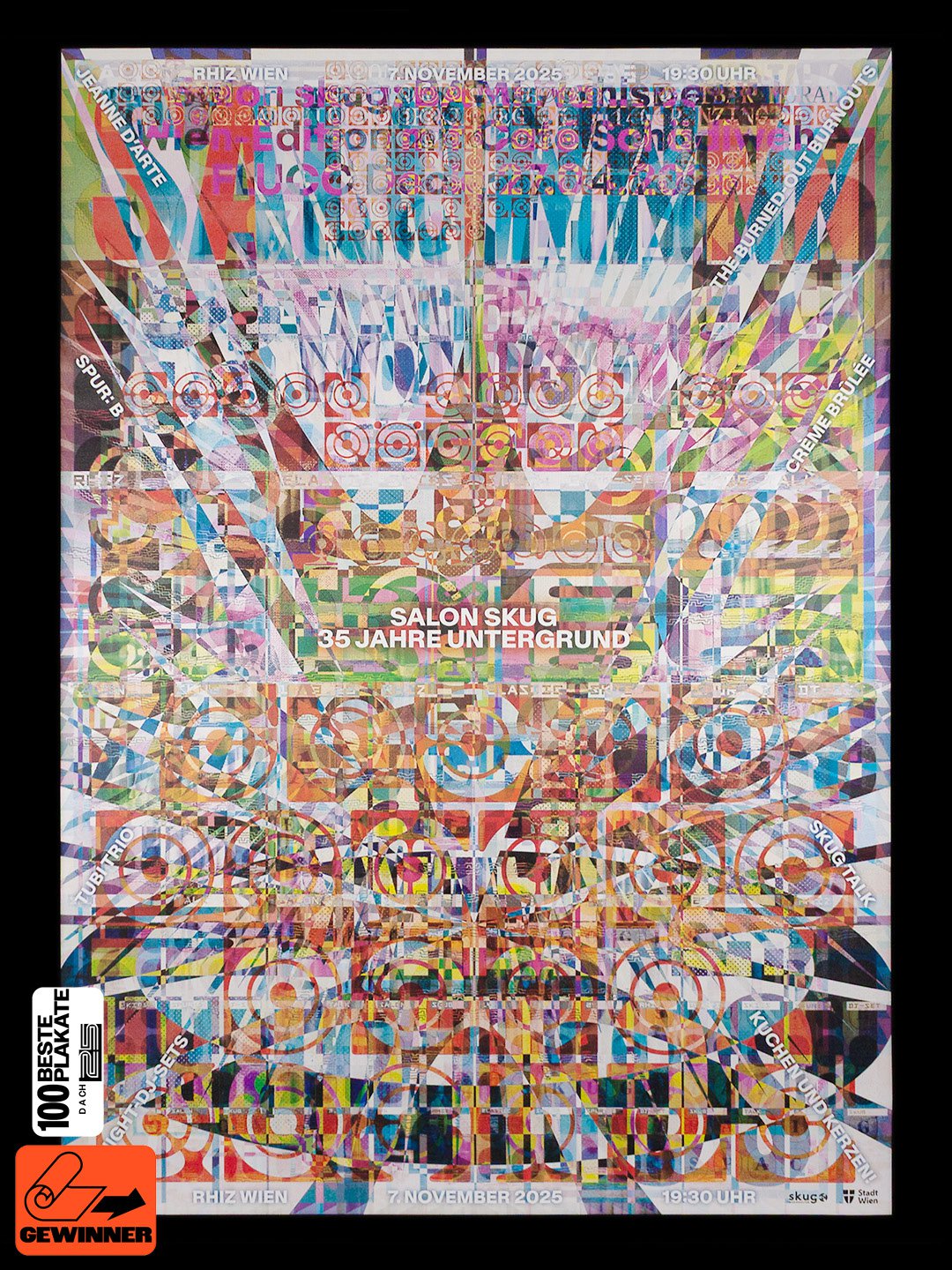
Each poster design by Nguyen Gobber is unique to that specific event and made in direct response to the evening’s performance, meaning they range drastically in colour, character, tone and type. The process usually starts with Hoang and David listening to the music and noting down any triggered associations, which become the foundation of the poster. “Through an iterative process, we explore different directions and try to weave in relevant references,” Hoang explains, using the Salon skug poster for December 2024 as an example. “It was very much inspired by the lyrics of a particular song of the artist Ines Wurst. We designed the typography to mimic the view down a staircase, which is the setting for the story.” The foundry’s own typeface, Farmacia, was used as the condensed display font. The whole series also serves as a creative excuse to experiment with new typographic forms and test entirely new typefaces. “Working with our own typefaces is something most Salon skug posters share,” Hoang adds. “Since we have complete freedom, each poster becomes a bit of an experimental playground.”
The distinctive tone of the poster series – one that evolves, dances, plays and reacts – is both the culmination of Nguyen Gobber’s innate reaction to the acts and an articulation of the founder’s approach to type, especially in what they consider expressive type to be. “We think of being ‘expressive’ not so much as in ‘standing out visually’, but in incorporating various visual, conceptual, technical, historical or other kinds of references,” says David. Through this definition, typefaces can express given ideas through the themes and context that underpin them. As David adds, “with Salon skug, we have events that are truly rich in various interesting themes and topics.”