
What works in advertising doesn’t work in creator marketing. That realization boosted L’Oréal’s audience engagement by 55%.

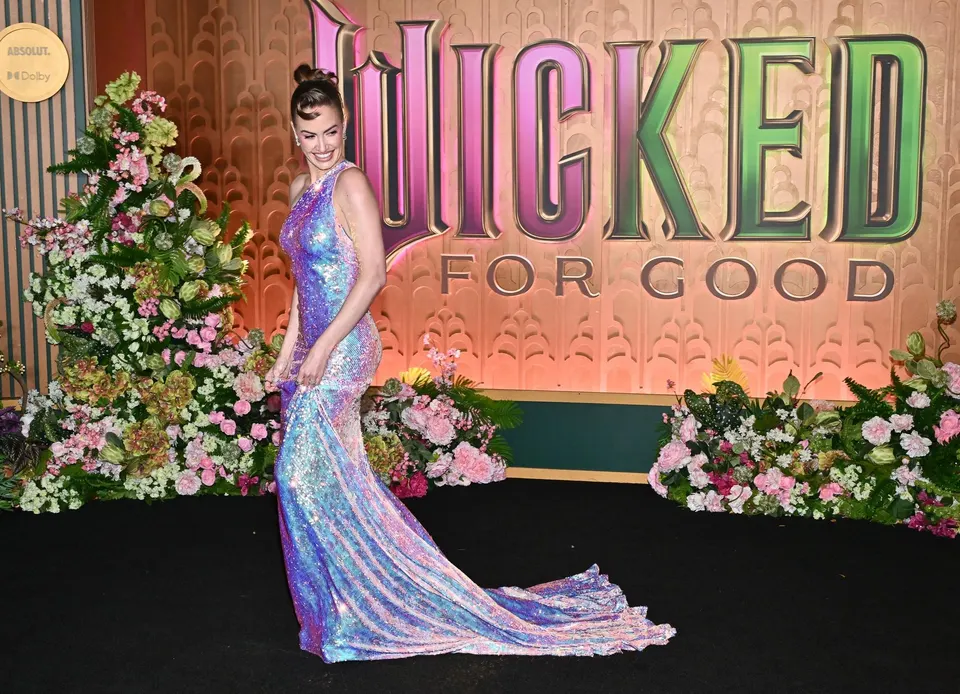
Haley Kalil attends the premiere of “Wicked: For Good” at Lincoln Center on Monday, Nov. 17, 2025, in New York. (Photo by Evan Agostini/Invision/AP)
2025 Invision
In partnership with Google and creative consultancy Sundogs, L’Oréal analyzed over 5,000 global YouTube ads across seven markets and multiple categories: beauty, auto, banking, retail, tech, luxury, and travel. Sundogs’ proprietary AI-driven diagnostics analyzed more than 120 creative signals per video.
What they found: the creative choices that look irrational in advertising are what drive performance in creator content.
The key research findings (published by WARC) impact everything from talent and casting choices to the recommended use of a broader range of emotions.
The Creative Decisions That Make The Work Work
The Sundogs research revealed clear, repeatable patterns all counterintuitive by advertising standards:
Get close. Really close. 55% of high-performing creator videos used extreme close-ups, the kind of framing that would feel inappropriate or amateurish in a traditional ad. In creator environments, proximity signals credibility, not performance.
Tell the truth, including the negatives. Creators who acknowledged product limitations alongside benefits drove 30% higher engagement. Advertising avoids flaws. Creator audiences expect honesty and reward it.
Let people lead, and products follow. While 86% of beauty ads put the product front and center, character-driven stories outperformed product-led content by 55%. The creator’s experience mattered more than feature claims.
Go Ahead, Surprise Me. Unexpected emotion drives engagement. Advertising typically features calm or neutral emotions. But videos that introduce unexpected emotions, humor, surprise, and even tension see outsized lifts in engagement and view rates. Only 6.5% of beauty videos use high-intensity emotion, yet they drive 40% higher engagement.
Creator Marketing: A “New” Third Space With Its Own Rules
“The cycle is not about what worked last year, it’s about what worked last week,” says Han Wen, Chief Digital and Marketing Officer at L’Oréal USA. “At L’Oréal, we can take advantage of the breadth of our portfolio to continually ideate, test, learn, and then scale across 36 brands.”
That rapid iteration revealed something the industry still struggles to recognize.
“Creator work for brands is not pure creator content because it has commercial goals, and it’s not classic advertising because the best work is not scripted,” explains Ben Jones, co-founder of Sundogs. “It’s a new third space.”
Jones, a former Google creative director who built YouTube’s creative effectiveness system, co-founded Sundogs to diagnose what makes creative work effective at scale. The consultancy works with advertisers including Disney, Apple, Nike, Google, and L’Oréal.
According to Jones, there are three distinct content categories:
Traditional Advertising: The brand controls the message. Actors deliver lines. Products lead the story.
Creator Content: Content and entertainment made for an audience. No commercial agenda.
Creator Marketing: Creator content with commercial goals. It requires creator credibility but must deliver business outcomes.
The distinction isn’t academic. Creator marketing demands a fundamentally different approach to both creative development and effectiveness measurement.
Ad effectiveness is not creative effectiveness. You can’t evaluate creator marketing with advertising metrics. Its a different category.
Once you understand you’re operating in a different category, the effectiveness patterns make perfect sense,” Jones says
Pierre-Loïc Assayag, co-founder and CEO of Traackr, has a front-row view into how global brands operationalize creator marketing at scale. He sees L’Oréal’s advantage as structural, not tactical.
“L’Oréal is winning because they’ve connected three things most brands treat separately,” Assayag says. “They’ve made creators a real growth lever, not an experiment. They operate with a creator mindset, giving creators narrative-led roles instead of using them as props. And they understand that data is complex.”
The strongest brands don’t optimize around surface metrics like views or follower counts. They look holistically at trust, relevance, and the power of niche communities. That’s what allows creator marketing to scale
From Insight to Execution: Maybelline’s Earned-First Shift
Understanding these creative inputs has changed how L’Oréal approaches creator work. “We have shifted to focus on earned-first ideas that people are interested in sharing,” Wen explains. “When we look at what successfully scales in social algorithms, we realize that the only thing that matters for our brands to win in the attention economy is ideas that spark word-of-mouth.”
The Maybelline Colossal Bubble mascara campaign shows what this looks like in practice.
The traditional advertising approach would have been familiar: hire a beauty creator, demonstrate the product, and amplify with paid media. L’Oréal deliberately rejected that playbook.
Instead of casting a beauty creator, Maybelline partnered with Rainbolt, a creator known for identifying global locations from tiny visual clues in the game GeoGuessr. They paired him with superstar creator Hayley Baylee and built the campaign around a challenge: Rainbolt had to locate a Colossal Bubble mascara that Baylee had hidden somewhere in the world.
The risk was intentional. The product did not lead the story. Baylee’s challenge to Rainbolt was center stage.
“Our internal ideas factory is reinventing how our brands go to market with disruptive, guerrilla-style campaigns, going from idea to launch in just six weeks on average,” Wen says.
The campaign results exceeded expectations:
∙ 8.27% video engagement rate—5.5x higher than the benchmark
∙ Triple-digit sales growth, with the mascara selling out at key retailers
The campaign worked because it followed the new approach: character-driven storytelling that earned attention, and product integration that felt real rather than scripted.
Creators Not Actors: The Structural Problem Holding Back Creator Marketing Success
L’Oréal’s research also revealed a deeper structural challenge. Brands brief creators for cultural impact but measure them on sales results. Yet, creators rarely see the data or insights that would improve their work.
“There’s no system connecting creator content effectiveness to commercial results,” Jones says. “Performance marketers care about sales but ignore creative signals. Creative teams care about content but can’t tie it to revenue.”
“If the goals are sales, and I know which storytelling choices help drive sales, I will do more of that,” Jones adds. “But if I never see that data, I can’t improve.” The fix isn’t more control. It’s better communication.
What CMOs Should Change Immediately
Asked how CMOs should approach creator marketing in 2025, Wen is direct:
“Good ideas can come from anywhere, and ideas that prioritize an earned-first mentality are going to win in the attention economy.”
Treating creator marketing as a distinct category allows brands to:
1. Identify which creative choices actually drive performance and results
2. Share data and insights with creators to inform future work
3. Turn learning into a repeatable system, not a one-off win
Audiences already know creator marketing isn’t advertising. The question is whether brands will adapt before their competitors do