
World Cup tickets can be hard to come by—unless they happen to be left out on the street.
Total Wireless is demonstrating that now with a low-tech, high-reward proposition: flyers with tear-off tabs offering free World Cup tickets, posted on utility poles. They direct curious passersby to a nearby Total Wireless store, where they discover the offer is real.
The guerrilla-style play gets at one of the clearest ideas shaping marketing efforts for the 2026 World Cup: access is everything. Brands are offering tickets and experiences to deliver value to fans in an effort to break through the Cup clutter. Others are treating the tournament as a retail opportunity, while still more are extending it beyond stadiums into everyday fan environments.
The moves come as brands seek to give fans something tangible—rather than simply making an awareness play—while feeding into the oncoming soccer craze as the Cup is played in the U.S for the first time since 1994. Ticket prices for some of the top-tier games cost several thousand dollars.
“We don’t want to just put the World Cup logo on something and call it a day. We want to bring that experience to life in a meaningful way and give people the opportunity to be part of it,” said Susie Corona, associate VP and head of marketing and brand strategy for Verizon Value, parent of Total Wireless.
Below, a closer look at three World Cup marketing trends ahead of the tournament, which begins June 11 and will be played in the U.S., Canada and Mexico.
How the World Cup is a retail moment
Brands are turning the tournament into a commerce engine, using collectibles and limited-edition drops meant to create a sense of urgency and connect purchases to the ways fans will experience the tournament.
The Home Depot is bundling Makita power tools like drill sets and circular saws with free FIFA World Cup Adidas scarves, effectively turning home improvement investments into expressions of fandom. Other brands are approaching the same idea from different angles: beer and spirits makers are rolling out limited-edition packaging and collectible products, while hospitality and travel players are packaging experiences as scarce, time-sensitive offers tied to the tournament.

Budweiser channels nostalgia through throwback World Cup bottle designs. (Anheuser-Busch InBev)
Budweiser is leaning into nostalgia, introducing a series of bottles with designs inspired by World Cups throughout history. QR codes on those packages unlock digital content and rewards.
Modelo is rolling out soccer-themed packaging and a limited run of co-branded apparel with Kappa, including items such as jerseys and track jackets. Modelo is also running a retail sweepstakes tied to watch-party gear.
Boston Beer-owned Truly, an official U.S. men’s team sponsor, is positioning itself at the center of the U.S. fan experience—rallying support behind the underdog squad with a campaign built around shared viewing moments. At its core is an anthem designed for bar sing-alongs, “Drink Like a Believer,” alongside limited-edition city cans and variety packs made for group watching.
Coca-Cola is also bringing the World Cup into stores by tying purchases to collectibles, including a Panini sticker collaboration that lets fans collect physical and digital items, while packaging, displays and local promotions help make the tournament visible at retail.
Why access is the new World Cup currency
Total Wireless tested its “Hidden in Plain Sight” stunt with a flyer stuck on a utility box in the Ridgewood neighborhood of Queens, New York, giving away 18 match tickets from nine tear-off tabs. Designed to blend into neighborhoods, the expectation is that most people will assume the flyers aren’t real, Corona said. “People are going to walk by and think, this is too good to be true.”

Passersby checking out a World Cup ticket offer that seems too good to be true. (Underhill)
The brand is currently replicating the stunt in three other New York neighborhoods and in four locations each in Miami, Los Angeles and Houston. The company plans to give away 100 tickets in all.
Corona framed the effort around a simple tension: the World Cup is a major cultural moment, but one that many fans never get to experience up close. Tickets are often out of reach for Total Wireless customers, she noted, making access itself the goal. The Community was the agency behind the stunt.
Last year, Total parent Verizon, the World Cup’s official telecommunications services sponsor, launched a campaign similarly built on access, with David Beckham promoting “golden tickets” providing pitchside game access.
Others are tying access to how people travel and spend, using tickets and experiences to pull fans into their ecosystems.

U.S. soccer legend Tim Howard shows off American Airlines’ World Cup livery. (American Airlines)
American Airlines is using its role as the tournament’s official North American airline to tie flights to match tickets and travel packages. For fans, the journey becomes part of the World Cup, not just a way to get there. The airline is painting select jets in tournament-themed designs and activating in airports across host cities, turning planes and terminals into part of the buildup around the event.
Visa’s approach to access is less about the big moment and more about the everyday. The brand is attaching tickets and match-day offers to everyday spending, creating a path to the World Cup through checkout. The program ties chances at tickets to purchases made with its cards, distributed through issuing banks and retail partners across e-commerce, in-store checkout and on-site payments. Each transaction can trigger an entry, turning routine spending into repeated chances to win rather than a one-time, sweepstakes-style proposition.
How brands are widening the World Cup playing field
Many brands are finding ways to insert the World Cup into the environments where fans already spend time—at home, in their neighborhoods and on digital platforms.
For some, that means turning sponsorship into active participation. Hyundai is hosting youth soccer camps in World Cup host hubs such as Atlanta, Miami and New Jersey with players including Mia Hamm and Tim Howard. The goal is less about visibility and more about embedding the brand in how the next generation experiences the sport.
Hyundai is also highlighting technology in its World Cup efforts. The automaker, which is a FIFA sponsor, is deploying robots at fan events as roaming attractions that interact with fans and showcase its robotics investments. Soccer star Son Heung-min, who captains the South Korea national team, emphasizes how soccer is like driving in a future-focused Hyundai spot.
Bank of America is taking a longer-term approach, investing in street soccer facilities to embed the sport into local communities. The effort reflects a bet that soccer’s popularity in the U.S. will grow after the tournament, with fan festival activations and neighborhood programs designed to support that momentum and extend the bank’s role beyond the event itself.
Others are extending the tournament into digital spaces. U.S. Soccer is launching virtual 2026 kits and a limited-time activation in Roblox through Gamefam. The activation lets players take on national team challenges inside a game that already reaches millions—placing the World Cup where fans are already spending hours, rather than asking them to tune in.

The U.S. men’s team kits are replicated in a Roblox game, bringing the World Cup where the fans are. (Roblox)
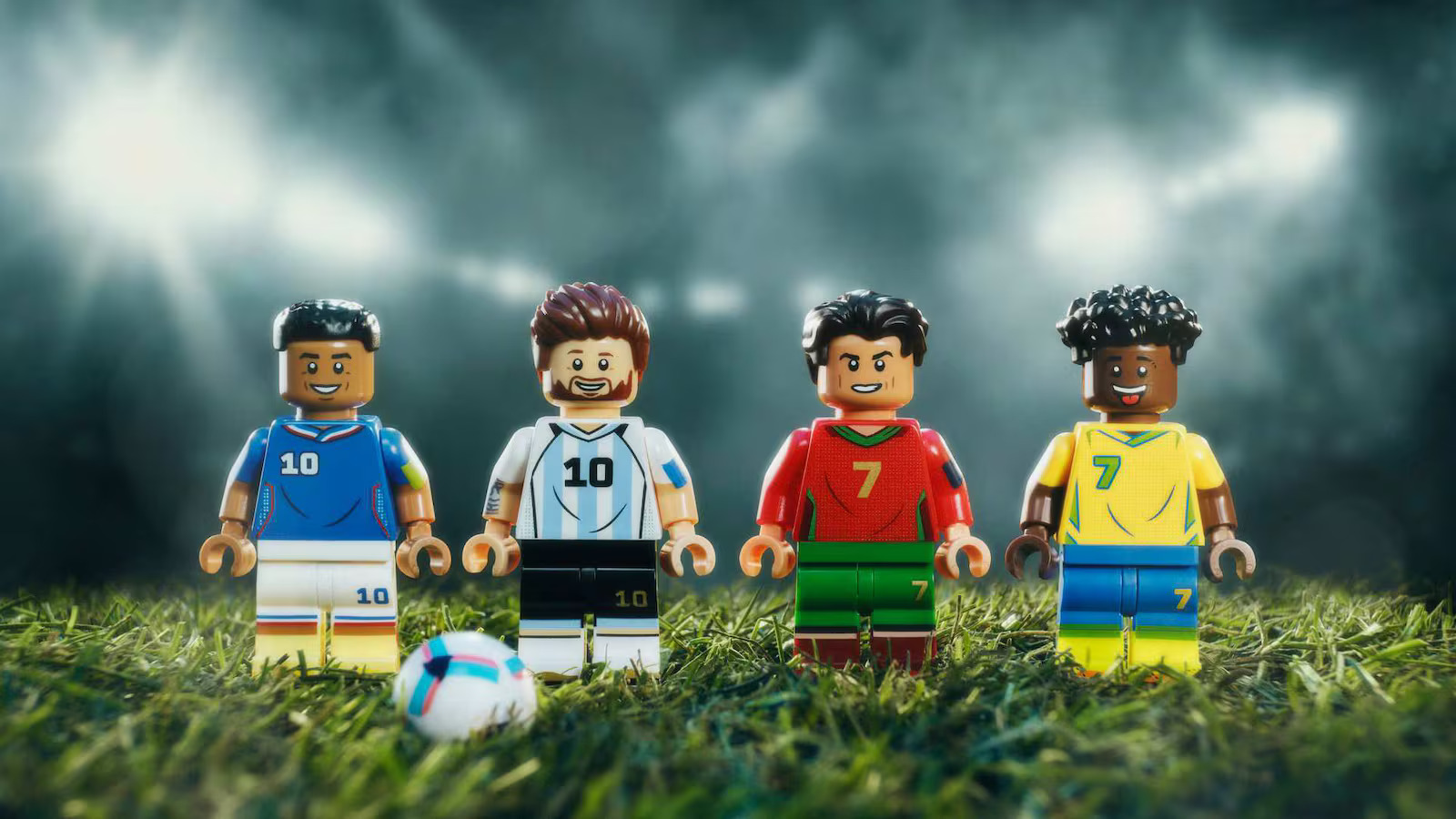
Lego, meanwhile, has released buildable collectibles featuring stars like Messi, Mbappé and Ronaldo. The limited-edition toys give young fans a way to engage with the World Cup beyond watching matches. The effort extends into in-store and pop-up activations.
Brands are also focusing on how fans watch and host the tournament in their homes. Home Depot is using “Beckham’s Backyard” installations at FIFA Fan Festivals to show fans how to set up their own viewing spaces at home, from seating to outdoor setups, with help from David Beckham.

David Beckham is helping Home Depot shoppers prepare their spaces for football. (The Home Depot)
Diageo is also focusing on where fans gather to watch, activating across bars and other social settings with programs tied to brands like Don Julio, Casamigos and Buchanan’s, using its portfolio to reach different audiences around the same shared viewing moment.