
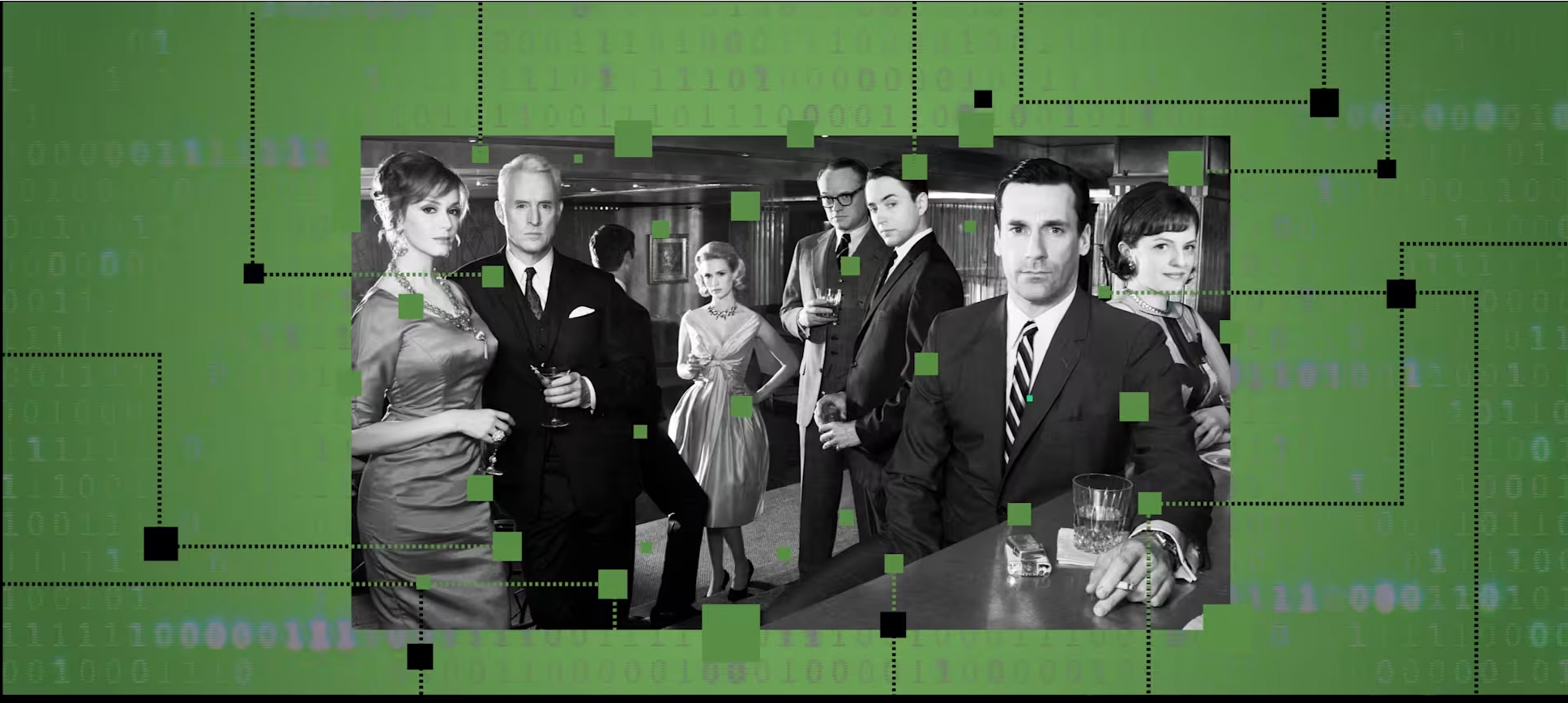
End of the road for the ‘Mad Men’ as AI moves into advertising
The era of the Mad Men is now firmly over, with the instant answers of chatbots now replacing the fast-talking advertising creatives of New York’s Madison Avenue as the industry’s centre of gravity. The enormous budgets, fully stocked drinks cabinets and hotshot filmmakers on speed dial — all made famous in the long-running TV series — have given way to teams of coders, with AI models replicating work in minutes but at a fraction of the cost. The traditional advertising agency model that brings together creative talent, strategic advice and media distribution, is facing an existential threat as a result, hitting share prices and putting jobs at risk. “We have seen more disruption in the last 12 months than we have seen in the last 12 years,” says Arthur Sadoun, chief executive of French advertising group Publicis. The Future of Marketing This article is part of a report on the Future of Marketing. Other pieces in the series cover the uses of AI, TV advertising and influencer marketing. Analysts say that no one can be sure where the market will end up. “Agencies are still largely structured — and priced — around activity. Clients are increasingly focused on returns. That gap is going to become harder to sustain,” says media analyst Ian Whittaker. “The uncomfortable reality is this: agencies are being asked to deliver outcomes, while still being paid for inputs. That model rarely survives.” The rapid adoption of technology has rewritten the rules of advertising. Streaming is replacing traditional television broadcasts; retail media, where brands pay retailers to promote products on their websites, is taking over from point of sale and outdoor display ads; AI-powered answer engines are capturing consumers from search; and creator-driven content is often trumping professionally produced media. Every time the advertising industry gets to make a big decision, they make the wrong one Rory Sutherland, Ogilvy Advertising executives say that change is coming at such a pace that the large agencies that have been built over the years on the back of lucrative pay-by-the-hour client contracts are struggling to adapt. “Every time the advertising industry gets to make a big decision, they make the wrong one,” says Rory Sutherland, vice chair of Ogilvy. “The two stupid decisions they made were the separation of media and creative and the decision to be paid by the hour, neither of which is in any way conducive to either healthy incentives or indeed the generation of real client value.” But he says the “arrival of AI finally provides us with a kind of crisis point where people will do something they should have done 20 years ago, which is take the talent — which is still very, very valuable — and effectively reorder the way it works”. Marketing group WPP plans to cut £500mn a year in costs by 2028 and sell non-core businesses as part of a sweeping overhaul. WPP boss Cindy Rose said that the plans also involve further investment in AI, which she said “functions as a crucial amplifier . . . clients want seamless, integrated solutions that drive real growth, and this is how we move beyond the old playbook for the new AI era.” Omnicom has taken over IPG — bringing together two large US ad agencies — with bosses cutting thousands of jobs in the combined business. John Wren, chair and CEO of Omnicom, says agencies are having to bolster their services to offer “integrated solutions, and that’s why we bought Interpublic”. “The ‘Mad Men’ era ended a long time ago, but that’s not to say the industry lost its creative spark,” says Wren. “When digital fragmented the marketing landscape, brands shifted from seeking one-off campaigns to demanding partners who could solve their most complex business problems.” Even Publicis — which has outperformed its rivals in terms of share price and operational results over recent years — has experienced a share price drop of 11 per cent since the start of the year, hit by industry-wide fears that AI rivals would soon be doing its traditional jobs more cheaply. All agencies are investing in their own AI tools, forcing them into an arms race to gain an edge in technology that could leave large parts of their own business obsolete. Daniel Hulme, chief AI officer at WPP, says the group is changing from a collection of autonomously-run businesses to a single integrated company to reflect the shift in the industry. He adds that “the industry left that [‘Mad Men’] world behind decades before AI entered the picture. What’s happening now is different and more interesting”. The traditional reliance on charging for the big creative ideas that will cut through a crowded marketplace is becoming eroded, with clients often taking such work in-house and looking instead for their agencies to work more as technology providers. “The big idea is still important but it’s not where agencies make the money any more,” says Mark Read, who stood down as chief executive of WPP last year. “It’s now how the idea is being transmitted.” The money has not dried up — WPP expects global advertising revenue for the industry to grow 7.1 per cent in 2026 to more than $1.1tn. But the money is now mainly going to tech groups. Jessica Tamsedge, CEO of Dentsu Creative UK&I, says the “removal of friction is reshaping our industry” with “cash flow, commission and day rates all squeezed by AI and technology”. More than two-thirds of UK media spend is now directed to tech platforms, bypassing media agencies, she says, while AI led to nearly a 15 per cent headcount reduction at creative agencies last year, “threatening the industry’s time and materials commercial model”. Many fear that an industry long reliant on the genius of people — with their ability to apply imagination, humour and creativity to complex tasks — could be undermined by a reliance on robots. Scale is no longer “the trump card it used to be”, Tamsedge says, instead pointing to the growing importance of adopting technology for strategic and creative thinking. “Designing brands for distinction at a time of supercharged AI sameness will stand us in good stead as an industry of strategic and creative advisers.” The problem is that agencies will be at risk if they pivot too hard to compete with the likes of OpenAI or Microsoft, according to executives, chasing low-margin scale with self-service marketing products. One describes it as a “dangerous game and not where we will win”. Others say AI is just another medium to be used by creative talent. This will continue to be an industry powered by people Annette Male, Dentsu UK&I Annette Male, chief executive of Dentsu UK&I, says large agencies now need to combine their scale with the sort of agility that is associated with independent rivals. “And at the core of that model sits our connected, creative people. Because this will continue to be an industry powered by people.” David Jones, chief executive of marketing technology group Brandtech, says the worst is yet to come for the large advertising agencies, but not for the talented workers in them. “AI is less than 1 per cent of how advertising is done, but 70 per cent of advertising will be done with no humans in the loop,” he says. “Agencies are less and less relevant. But in a world of GenAI, brand, creativity and human taste and judgment has never been more important.”