
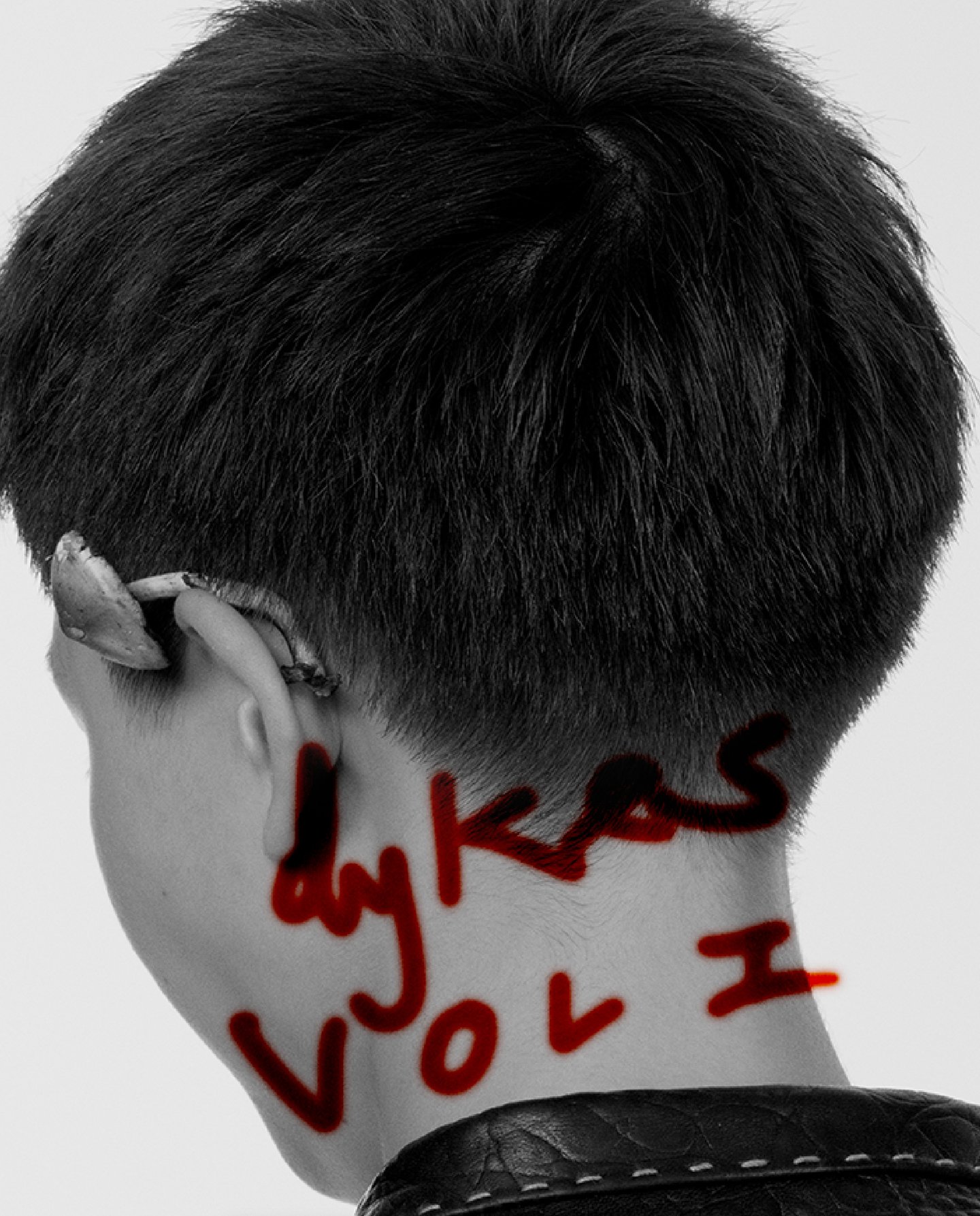
The book’s focus slowly became clear: dykes. From this formed a cumulative photo series that would be made over a number of years in collaboration with its subjects — “all of whom self-identify as a dyke or as part of the dyke community”, Emily shares. The final images move fluidly between portraiture and fashion, documenting a range of people the photographer has met throughout her life, from close friends to exes or creative collaborators. The project wasn’t casted but, instead, came out of quite organic connections within a community of “people that share a similar definition of self”, the artist says.
Designed and produced alongside SJ Todd, art director at AnOther Magazine and founder of SJT Studio, the photobook was sequenced deliberately against the pace and “surface-level consumption” of fashion photography, diving beyond the day-to-day shoots that shape Emily’s practice and digging below the surface, on subjects of visibility, representation and authorship: “the series centres a community whose visibility has too often been shaped by external gaze rather than self-definition”, Emily says.
At the core of the project for Emily was a resistance to conventional representation: “a ‘dyke’ is not a singular thing,” she says. “The community isn’t narrow, unified, or clean. It is not only cis lesbians for example. It includes trans masc men, trans femme women, nonbinary people, and bisexuals.” In many ways the photo series set out to challenge common narratives around how dykes are supposed to “look” or “act”. Alongside the range of participants the photographer has documented, Emily’s resistance to one photographic technique or style only builds on the collections expansive view on queerness – each image’s distinct personality, visually resists a monolith.
Now that it’s out it’s very important to the photographer that people don’t pick up the photobook and see it as somehow whole and ‘complete’. “50 is still not a lot of people. It’s just a microcosm,” she says. The final publication does, however, seek to address some of the photographer’s own frustration about all the ways they have “not felt seen or understood or flattened”. With a desire to make something that more people can see themselves in that traditional narratives and mainstream media, Dykes is simply, as the artist puts in their statement for the book, a way of “insisting – through images – that identity is alive, unstable, unfinished, and worth looking at closely”.