
Why you can trust Creative Bloq
Our expert reviewers spend hours testing and comparing products and services so you can choose the best for you. Find out more about how we test.
Details
(Image credit: Kwalee Ltd)
Publisher Kwalee
Developer Out of the Blue Games
Release date 12 May
Format Xbox Series X|S (reviewed), PlayStation 5, PC, and Nintendo Switch 2
Platform Unreal Engine 5
If you’re the sort of person who enjoys decoding ancient nonsense scribbled on walls and staring at constellation charts for 20 minutes, convinced you’re on the verge of a breakthrough, then you’ll find a lot to like about Call of the Elder Gods. Developer Out of the Blue clearly knows its audience, as this follow-up to Call of the Sea feels like the studio has doubled down on what people loved: bigger puzzles, stranger mysteries, more overt cosmic horror, while still hanging on to that approachable pulp-adventure tone that prevents things from dragging.
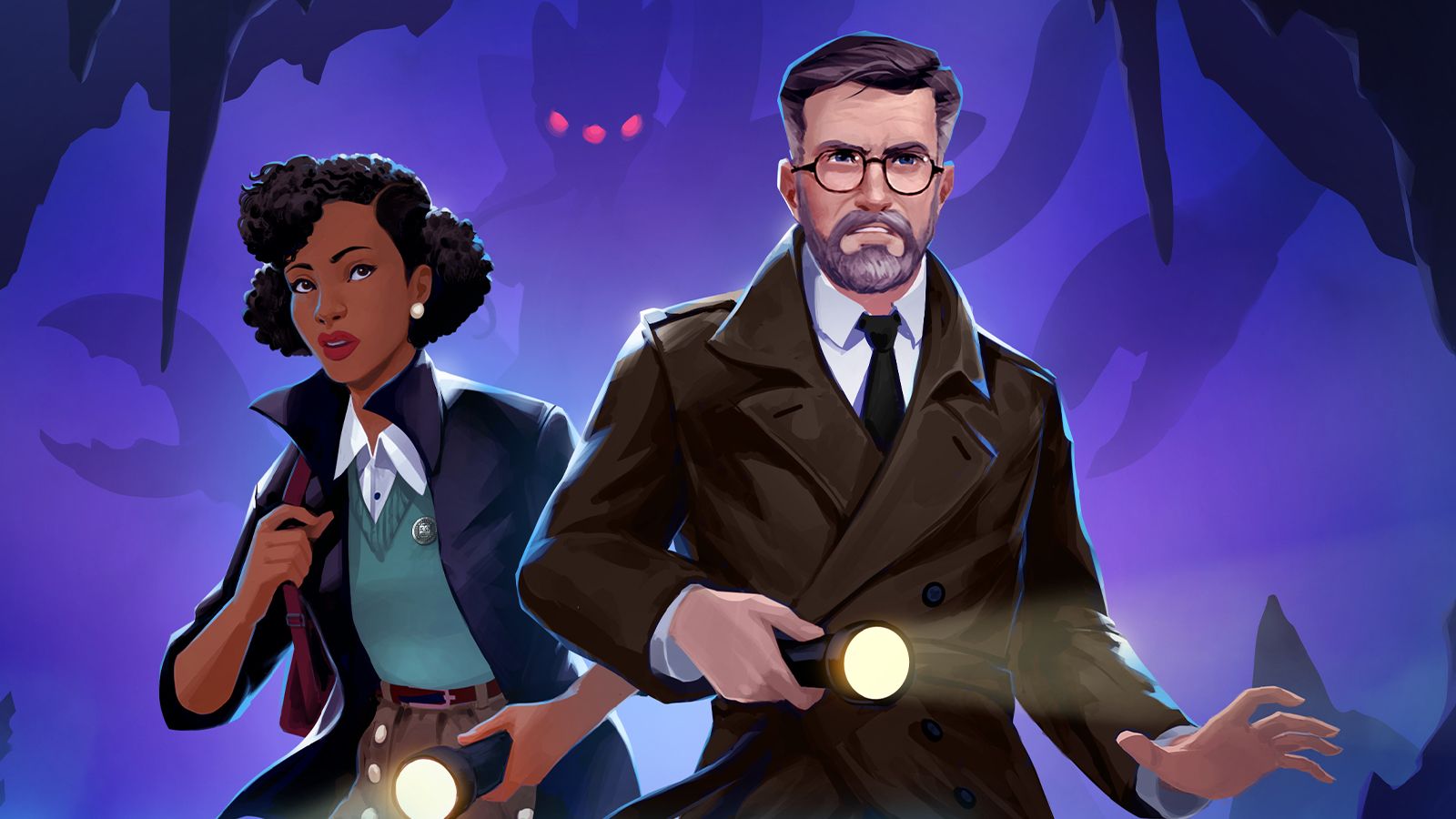
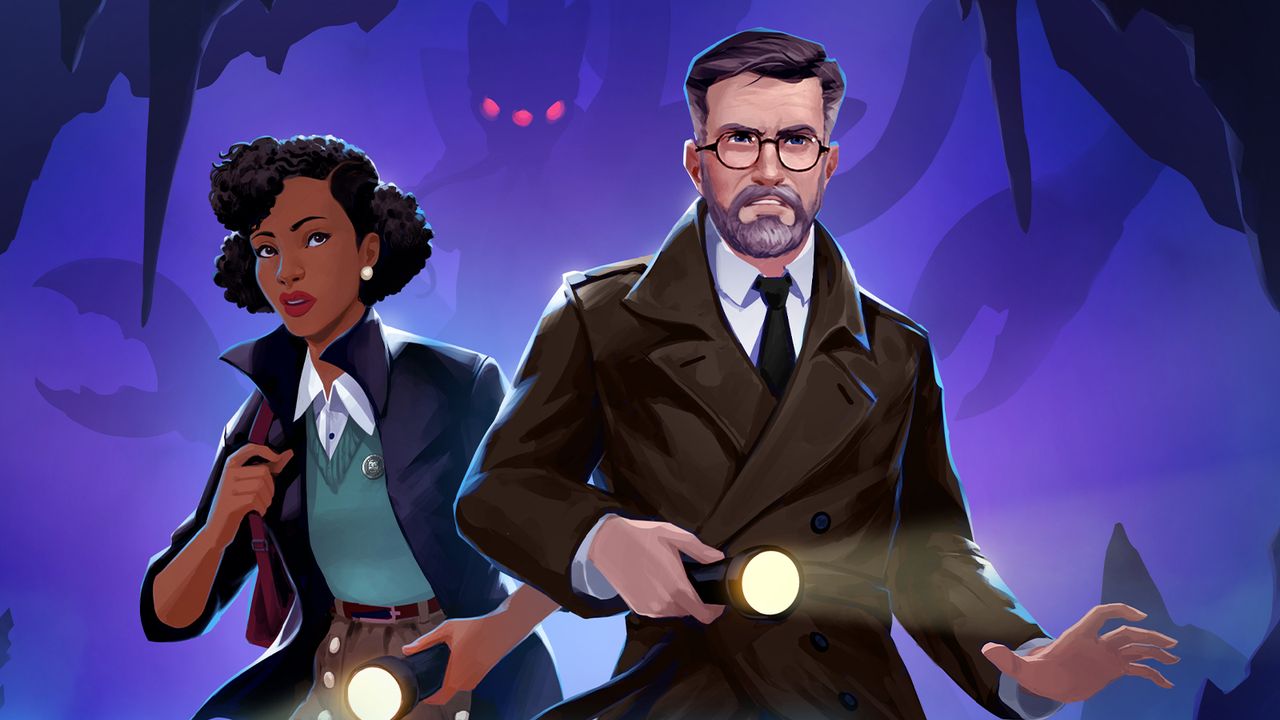
The 1957 setting does a lot of work to lift the puzzles and make everything breezy and engaging. There’s a nice streak of post-war Americana running through the game, with Professor Harry Everhart and newcomer Evangeline Drayton exploring the polished bookshelves and corridors of Arkham University in deep Lovecraft Country, and venturing into ancient archives and lost Nazi occult conspiracies literally frozen in ice. It all gives Call of the Elder Gods a kind of cosy-mystery energy, even when it’s talking about impossible timelines and ancient beings beyond human understanding. It’s got one foot in Lovecraft and the other in Indiana Jones, though never fully committing to either, which mostly works in its favour.
The more time you spend in the game, the more its small-scale aspects become noticeable. For all the painterly environments and lovely art direction, the world itself can come across as weirdly sterile, designed purely to hang new puzzles from and not lived in a real sense. Each chapter tends to boil down to exploring a handful of rooms, examining handily scattered or placed objects – clues are gathered, patterns cracked, and eventually the illusion of a world ripe for exploration is withdrawn. There’s a definite escape room feel that overshadows the broader cosmic horror, and it can dampen the narrative’s big moments.
On occasion you can swap between the two protagonists to solve puzzles, such as a moment when you need to guide Evangeline past an inky death cloud. (Image credit: Kwalee)
A puzzle box with a few loose pieces
Thankfully, the puzzles themselves are often smart enough to paper over many of the world-building cracks. Call of the Elder Gods starts gently, with memory tests, observation puzzles, and bits of pattern matching (though there is a testing Latin puzzle to contend with – my 1980s comprehensive education didn’t stretch to such things), before spiralling into the sort of elaborate investigations that completely consume your evening. One mid-game puzzle involving the identities of an Egyptian cult is probably the game at its absolute best, tying together interpretation, number juggling, object manipulation, clue hunting and good old-fashioned lateral thinking in a way that makes you feel properly clever for figuring it out. It’s messy, tactile and satisfying when the answers begin to fall into place.
But then the game can occasionally disappear up its own backside a little, with one late-game puzzle involving time travel, astrology and palaeontology genuinely had me stumped. There’s a fine line between puzzles that offer rewarding complexity and total information overload, and Elder Gods doesn’t always know where that line is, and I get the sense the developer has really enjoyed crafting its two or three big tentpole puzzles to stop you in your tracks.
Making life a little easier is the clue journaling system, with Everhart’s dead wife sketching clues and observations into your journal from beyond the grave, or before it, or beneath reality, because of course she is. It’s not as complex as the ambitious AI mind palace from Cthulhu: Cosmic Abyss, but it does mean even when you’re hopelessly stuck, the answers are usually sitting somewhere in your notes staring directly at you, which makes even the hardest puzzle in the game feel manageable. But there are absolutely moments when the enjoyment of finding a solution can feel at arm’s length because things can get a little obtuse.
The game goes further into its cosmic horror inspiration than the first game. (Image credit: Kwalee)
The mystery needs solving
That push and pull between accessibility and downright trickery defines the whole experience. When it works, Call of the Elder Gods is a wonderfully cosy narrative horror game full of atmosphere and clever ideas. But when it doesn’t, you become painfully aware you’re solving complex patterns rather than inhabiting a world that wants to tell a story as much as tease your brain cells.
Visually, it lands somewhere similar to. Made in Unreal Engine 5, there are plenty of shiny surfaces on show to make the world feel solid, and the overall art direction is lovely, with its geometric stylisation mixed with Norman Rockwell-like character design that feels familiar yet has enough charm of its own. But the seams show: the game’s animation can feel stiff, some conversations occasionally lack energy and read like info dumps, and some cutscenes rely on static illustrated frames that feel more functional than dramatic. It never completely falls apart, but it does chip away at the immersion and any sense of threat or tension over time.
However, what keeps everything bubbling along, other than the mostly excellent puzzles, is the pairing of Everhart and Evangeline, who make for a genuinely entertaining pairing, his exhausted, world-worn attitude bouncing nicely off her more sarcastic and playful energy. Everhart’s grief over the events of Call of the Sea also gives the story more emotional grounding than you might expect from a game about cults and cosmic timelines, while Evangeline has her own past to reconcile – meaning we get two endings that are different but also kind of the same (it’s all a matter of time and space).
Each chapter has a standout tentpole puzzle, this one begins simply – align the sun beams – but has a fun black ooze manipulation second phase. (Image credit: Kwalee)
Narrative, puzzler or horror?
The bigger issue is that it all ends fairly quickly. Elder Gods only lasts around five or six hours unless one of the larger puzzles completely derails your progress. Outside the major set-piece investigations, a lot of the smaller puzzles riff on ideas you’ve seen before and can be walked through in moments; in fact, a few will feel a little familiar to anyone who plays a lot of escape room puzzlers.
Above all there’s a still a tension between what this series wants to be; while Call of the Elder Gods doesn’t fully land as a cosmic horror or fully fleshed narrative adventure, an Edith Finch-like walking sim (or a Mixtape, if you want to go there), and it can sometimes feel more like a very elaborate puzzle delivery system than a believable world, when the clues click together, and the mystery starts spiralling somewhere strange, it’s hard to put down.