
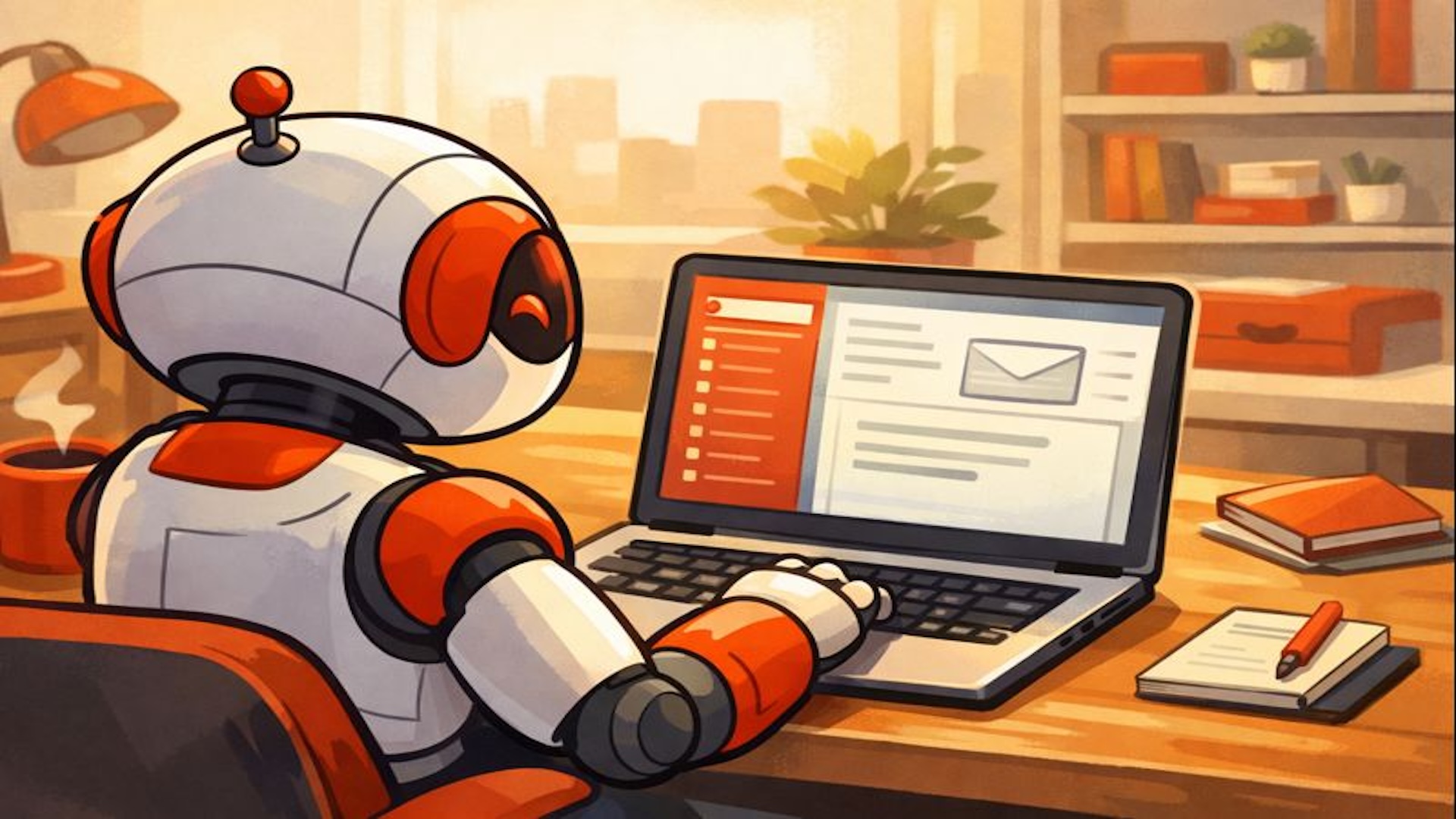
The email inbox is undergoing an AI-driven remodel that changes the way subscribers use it, how they view and manage their email and their relationships with the people who send them messages.
Instead of serving as a static source of messages that require clicks to deliver their information payloads, the inbox will be the next battleground for agentic AI — an autonomous system that can prioritize messages, sum up their contents and use the information to develop personalized action plans based on what they have learned from our own daily use.
Marketers aren’t ready for this shift. Those who know what’s happening in inboxes now, in Gmail, Yahoo Mail and Apple Mail, are complaining about developments like AI summaries and preheader hijacking because it turns our hard-won email knowledge on its head and forces us to once again rethink everything we do with our email programs.
The inbox is changing and you can’t opt out
Here’s the kicker: Users can’t opt out of these inbox changes in the same way they could decide not to use Gmail Tabs in Gmail or preview panes or automated unsubscribe prompts. We can no longer assume we know exactly how our messages will appear in most inboxes, since the experience will differ for each user.
If this argument sounds familiar, it’s because I started talking about this topic here in MarTech several months ago. Back then, I was noodling with the idea of AI-driven inbox transformation. As 2026 unfolded, the path has become clearer to me.
Even though I don’t do predictions, I can stake my claim that we will see inbox providers use AI to drive drastic changes, to reduce the noise in their users’ inboxes, to make it a cleaner experience and to make the inbox experience even more relevant.
Once again, marketers have to adapt to change. We’ve done it before, not without complaining. We’ll have to do it again if we want to keep email a vital channel.
The investment will be worth it. As Zeta Global’s Chad S. White said recently, email is “the least dangerous thing you can do” as a marketer because it preserves the direct link between your brand and your customers. It’s on us, as email marketers, to rise to the challenge and maintain that essential contact.
Dig deeper: More AI for the Gmail inbox isn’t the end of email marketing
Inbox prioritization and where it will go
If you have a Gmail account (and who doesn’t have at least one?), you’ve seen what Gmail has already done with AI implementation.
Although some phases are still rolling in, Gmail is reordering my emails based on when I engaged with senders, rather than when I received them.
Which ones do I open most often? Which do I delete without opening? Whose email do I let pile up without acting on it? It all goes into the mix to determine inbox order.
Within the next two to three years (my money is on sooner, not later), we’ll see a fuller AI implementation. Gmail will pull in all the data points it has on your activity across all sources — browse history, purchases, click behavior and whatever else it can track.
Then, instead of siloing emails in tabs, it will give you a unified experience based on what its algorithm predicts you want to see most. Not that the tabbed format will go away permanently. You’ll have a discard tab that contains everything Gmail considers noise.
That’s what inbox providers have been fighting against for so long — the noise, the slop, everything that diverts your attention or drives you out of your inbox or leads you to a different service.
Once Gmail figures out the prioritization right, the inbox will become something more like an AI assistant, along the lines of the assistant in Minority Report, where AI interprets your interests and activities to guide your life.
How this could play out in real life
Here’s one practical format:
- You wake up in the morning, pick up your phone and say, “What do I need to know today?”
- Your inbox says, “Your mom emailed you to ask about your flight home for the weekend. Do you want me to reply?”
- You answer, “Yes, send her my flight details, but put it in my voice.”
Nothing evil in that. It even saves you a few minutes of scrolling through your inbox, digging out your flight confirmation and forwarding it. Never again will your mom complain that you take too long to answer her emails or that you never reply at all. That’s a win for parent-child relationships.
Here’s another:
- Your inbox assistant reads your new messages and correlates them with your browsing history.
- It sends you an alert: “That garage door opener you looked at a week ago is on sale at this retailer you subscribe to. You should look at it.”
The more you respond to these alerts, the more precise the experience will be.
Dig deeper: Adapting email for AI-powered inboxes and zero-click journeys
What it means for email marketers
Good CEOs plan not just for the coming 12 months but for what could happen three and four years down the road. As the CEO of email for your company, you should take the same approach.
Looking ahead to the ultimate extension of the inbox, I see two major challenges emerging from Gmail’s AI-driven changes. I’m focusing on Gmail because its scale and backing from Google give it outsized influence, but many of these changes are already happening — or in the works — at other inbox providers like Yahoo Mail and Apple.
Mass unsubscribe prompts will decimate email reach
Right now in Google, you can see everything you can subscribe to using your Gmail address and unsubscribe from on one page. Using Gmail to opt out isn’t as effective as unsubscribing individually because Gmail’s unsubscribe feature isn’t 100% accurate, at least in my experience. But it still puts subscribers in the delete-me mindset.
By the way, there’s talk that the processing of that request to the ESP and the subsequent retroactive reporting are confusing and alarming for some marketers. Make sure you’re looking at the raw data and digging into processes.
But the day that Gmail comes out with a button that says, “Unsubscribe me from what I don’t care about,” that will decimate this industry.
That’s a big difference. You aren’t pulling the trigger on each subscription yourself anymore. You’re delegating that decision to a third party, which will use the information it has on your open and click activity to decide who goes and who stays.
Consumers will flock to this feature because their inboxes feel overloaded with noise. It’s not a great leap to conclude that consumers will look for the proverbial easy button to reach inbox zero.
Your subscribers wipe out the deadweight in their inboxes, and your list falls from 10 million to 2 million or less. And it’s not just the names. It’s your ability to connect directly with those subscribers.
Maybe they didn’t open or click on every email, but just seeing your brand name in the inbox is sometimes enough to keep you on their radar screens. This nudge effect can even prompt you to go directly to your website without leaving the usual bread-crumb trail from the inbox.
Dig deeper: Email marketing is becoming an agent-to-agent system
Marketers will have to change their personalization approaches
Inbox innovations come and go, but personalization and its downstream effects (relevancy, attention, etc.) will be with us forever. The need for personalized and relevant email — beyond a first-name greeting — will only increase as inbox providers use engagement data across email and other channels to decide which messages rise to the top and which get pushed to the bottom or discarded.
What we might see is a balance between KPIs for conversion and engagement. If the user clicks through and browses, that sends an intent signal that inbox providers would recognize. This could keep your emails in the inbox instead of the discard pile.
We know we need to build email differently today. We thought we had everything figured out when we understood what caught readers’ eyes in the inbox, such as choosing the right sender name, picking the right subject line and adding useful preheader info.
AI summaries and extracted copy change all of that. We don’t control that anymore. That’s probably going to be the hardest thing marketers have to give up — this idea that they can control the inbox experience.
The implications of AI summaries also mean that image-only emails have no content and, thus, are irrelevant to the AI. If you still insist on sending image-only emails, you must change tactics immediately.
This all means we have to think about how we build emails differently to keep subscribers interested and opening and clicking on our messages. I don’t have the answer yet. But we will eventually figure it out, maybe through trial and error, because that’s how we have always overcome every challenge to email over the last 30 years.
What to watch as the AI inbox evolves
I hate ending on a tentative note. I prefer to share strategy-based action plans or help readers understand the issues that will affect their email programs in the near and long term. That’s where I have to leave you today because we don’t have the answers yet. The inbox of January 2025 had been transformed for many users by the end of December.
Now, as 2026 unfolds, we’re seeing even more changes. Over the last couple of weeks, Gmail announced a change that expanded the use of email aliases to include all-new usernames, not just the original username with a “+” and a keyword.
It also introduced AI Overviews, which uses natural language instead of keywords to find information in email messages, expanded AI-driven services like Help Me Write and announced AI Inbox, now in testing, which is expected to act like a personalized briefing with reminders and alerts. (See the full list here.)
Where will we be in December 2026? I’ll be tracking changes, including those Gmail just rolled out and reporting back to you throughout the year with insights and advice. Watch this space.
Dig deeper: 3 strategies for killing AI slop in your email copy
Fuel up with free marketing insights.
Contributing authors are invited to create content for MarTech and are chosen for their expertise and contribution to the martech community. Our contributors work under the oversight of the editorial staff and contributions are checked for quality and relevance to our readers. MarTech is owned by Semrush. Contributor was not asked to make any direct or indirect mentions of Semrush. The opinions they express are their own.