
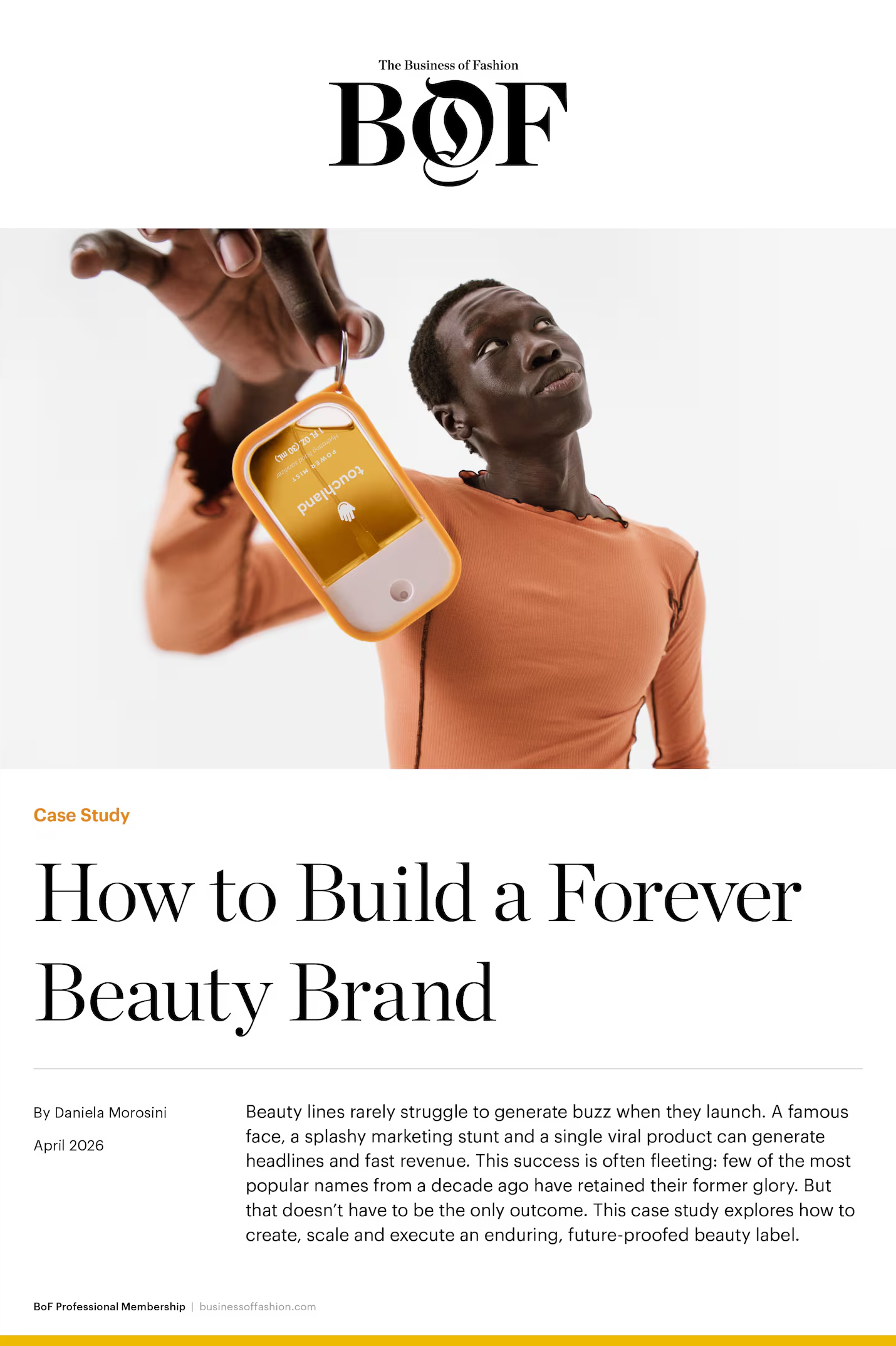
Beauty lines rarely struggle to generate buzz when they launch. A famous face, a splashy marketing stunt and a single viral product can generate headlines and fast revenue. This success is often fleeting. This case study explores how to create, scale and execute an enduring, future-proofed beauty label.
Too often, white-hot beauty labels fade fast.
The question of longevity is plaguing founders, investors and would-be acquirers alike. Despite the resounding popularity of beauty as a category and the frothy multiples top lines can command, many makers of skincare, haircare, fragrance and makeup products grapple with declining interest and relevance over the years. Founders and executives feel pulled in different directions. In order to cut through in a hyper-competitive environment, they face pressure to create products and campaigns that generate buzz on social media while simultaneously tweaking their assortments to please retailers. Attempting to tick off all these items too quickly can weaken an overall brand proposition.
“It’s not easy to stay true to what [a] brand’s vision is. It’s almost easier to try to replicate the latest textures or colours that are popular,” said Lisa Payne, head of beauty at trends agency Stylus. “But you have to ask [of a trend], ‘It’s viral now. But does it have legs in the future?’”
For a label to become part of the fabric of a customer’s life, it needs differentiation, consistency and creativity. The products must be truly superior, or offer a better alternative to what is currently on the market. The brand must also have a unique visual point of view that is iterated across every touchpoint and brings customers into a cohesive world.
Creating these core competencies takes innovation and conviction as contrasting trends appear, or stakeholders suggest changes that could be revenue-generative in the short-term, but dilutive in the long-term. It’s crucial to have a strong core proposition and clear sight of who the customer is, along with the ability to retool intentionally and evolve when needed.
This case study includes insights from modern legacy labels The Ordinary, Harry’s, Judydoll, Touchland and others. It explores how they have created brands that have become well-integrated in customers’ routines through product development, world-building and marketing to secure loyalty and growth. It will unpack what goes into crafting a timeless line, from creating a superior product offering and designing a launch cadence that allows for growth to establishing a strong visual identity.
Some, like Harry’s and Touchland, have reinvented a market segment customers considered quotidian, making it fresh and exciting. Others, like Rhode, have expanded what an existing category, like skincare, could mean to shoppers. All have crafted clear, distinct brands and assortments that will endure.