
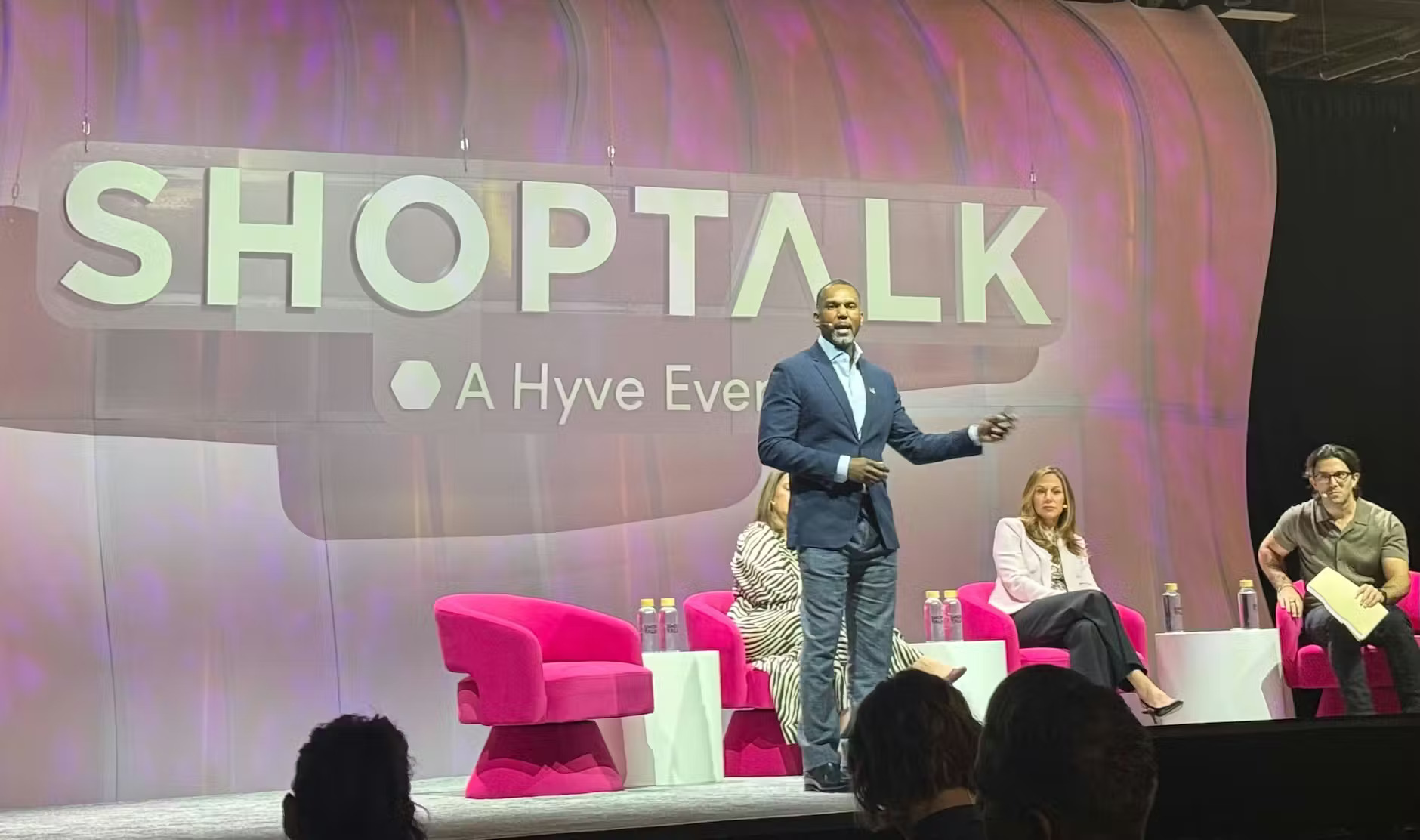
At Shoptalk 2026 in Las Vegas, a curious coalition took to the stage: a retailer, a brand and a landlord.
The panel – moderated by Simeon Siegel of Guggenheim Securities – featured Cephas Williams Jr from Target, Emily Lewis from Glossier and Lee Sterling of Simon Property Group.
The topic was deceptively simple: why physical retail still matters in an age increasingly shaped by AI, e-commerce and algorithmic everything.
But what followed was less a defence of bricks and mortar than a reframing of it. Stores, the panel argued, are no longer simply places to buy things. They are places to belong.
The store as a social antidote
Lewis opened with a statistic that landed like a warning flare. A 2024 study by King’s College London found that 56% of Gen Z feel disconnected even in shared spaces. Meanwhile, research cited from the US surgeon general suggests young people now spend 1,000 fewer hours a year socializing with friends compared with two decades ago.
That context helps explain why stores are evolving into social spaces rather than transactional ones.
Lewis described a moment she had witnessed inside Glossier’s New York flagship. Two strangers met while testing makeup at the brand’s now-famous product testing tables. A compliment sparked conversation, which led to shared tips, laughter and eventually exchanged Instagram handles.
“They now come to Glossier events together,” Lewis said. “That’s not a transaction. That’s connection.”
For a brand like Glossier, which built its identity online, physical retail has become the place where the brand becomes real. The company designs stores almost like stage sets: immersive environments filled with tactile products, selfie moments and hyper-local details. London’s Covent Garden location resembles an elegant townhouse. The New York flagship includes a custom subway station installation. In Los Angeles, a giant version of Glossier’s Boy Brow greets visitors at the door.
About half of the visitors to these flagship stores are tourists, Lewis said, turning them into destinations in the same way Apple stores or Disney attractions are.
“If Apple and Disney had a baby, it might look like a Glossier store,” she joked.
Retail as theater (and community)
For Williams, the philosophy is similar but executed at massive scale. Target operates more than 2,000 stores and employs around 350,000 team members, which means creating memorable experiences requires discipline as well as creativity.
The retailer frames its store strategy around three ideas: easy, inspiring and friendly. Easy means frictionless shopping, whether online or in-store. Inspiring means product discovery. Friendly means human connection – something Target takes seriously enough that it stopped calling customers ‘consumers’ decades ago. “They’re guests,” Williams said.
The company is now doubling down on stores as community spaces. Events are becoming central to that strategy, from Taylor Swift album launches to Lego activations to community celebrations.
One recent Lego event transformed a store into a mini Star Wars world, complete with themed experiences for children. “A dad told us he just came in to shop and stumbled across the whole thing,” Williams said. “That kind of delight – that’s what we want.”
Starting in April, Target plans to host events every Saturday in every store. That means more than 2,000 local experiences happening across the country every weekend.
For Williams, the goal is simple: make people feel the store belongs to them. “My Target,” as customers often call it.
Want to go deeper? Ask The Drum
The landlord’s perspective: the mall as town square
Sterling, representing the landlord perspective, described shopping centers less as retail infrastructure and more as modern town squares.
Simon Property Group operates some of the largest malls in the US. While retail sales are still the economic engine, Sterling argued the real loyalty driver is the sense of place. “The reason people come back is because it’s where their community comes together,” she said.
That means events, restaurants, cultural programming and constantly refreshed experiences in shared spaces. Traffic, in her view, remains one of the most important retail metrics – but engagement matters just as much.
“Are people actually connecting with what you’re doing?” she asked. If they aren’t liking, sharing or talking about a store experience, she argued, retailers should question whether it matters at all.
The new loyalty: belonging, not points
The panel also explored how loyalty itself is changing. The traditional loyalty model – points, stamps, punch cards – is giving way to something more emotional.
Glossier focuses on behavioral loyalty rather than formal programs. The goal is to create a sense of belonging that drives repeat visits.
Simon Property Group has taken the opposite route, building a cross-brand loyalty ecosystem that rewards shoppers for spending across its properties and retailers.
Meanwhile, Target sees loyalty emerging through consistency. “Retail isn’t just transaction,” Williams said. “It’s connection, discovery and feeling welcome.”
The surprising KPI problem
One of the more provocative moments came when Siegel asked the panel to name a retail metric they wished would disappear. Lewis nominated “sales per square foot.”
While crucial for large retailers, she argued it can distort conversations about store design and customer experience. “It keeps the conversation focused on transactions rather than connection,” she said.
Sterling pointed to another outdated obsession: digital impressions. In the era of social media and experiential retail, she argued, engagement matters far more than reach.
“Do people actually care?” she asked. “Are they sharing, commenting, reacting? If not, why are we doing it?”
The future of the store in the AI era
The underlying theme throughout the discussion was that AI and e-commerce are not replacing physical retail – they are redefining its purpose.
Digital tools are becoming better at convenience, logistics and personalization. That leaves the store free to do something technology struggles with, such as creating human moments.
In short, the future store isn’t just a store. Its stage, a social network and a brand experience all rolled into one.