
The best marketers build from the fundamentals up. Learn how The ADWEEK MiniMBA in Marketing gives you the structure and confidence to make better decisions. Sign up here.
A few months ago, at the Spanish offices of Suntory Beverage where I served as its European CMO, I was presented with a brilliant activation for our Schweppes brand.
It was one that would teach me an important lesson.
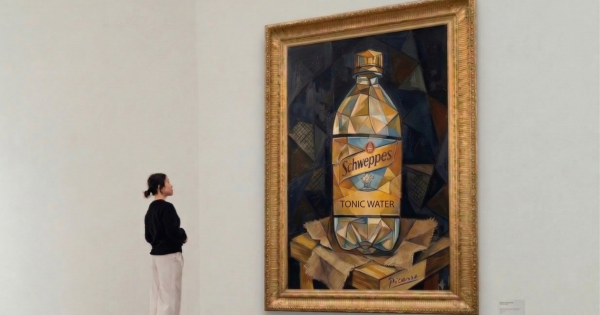
Our team had created some eye-popping bar takeovers in venues across Spain, with bright yellow lounge furniture, outfits for bar mixologists, Jacob Schweppes paintings—a whole Instagrammable set.
Schweppes’ activationFrançois Bazini
It was spectacular. It created that warm, intoxicating feeling every marketer secretly chases. Schweppes was showing up as the most dominant, visible brand precisely where our drinks were sold.
Then, the CFO asked the only question that matters for a mass brand: Could we take it from a couple of showcase venues to hundreds of bars next year? Can we scale this?
That’s when the spell broke.
My team had been inspired by another Suntory brand: the elegant Japanese gin Roku.
Roku is premium by design, the kind of brand that should be flaunted on terraces in a cherry-blossom spectacle. As such, Roku had brand activations to match.
My soft drink team observed Roku’s takeovers with envy. Schweppes existed in the very same bars, linked literally by gin and tonics. We worked with the same bar owners, were served by the same bartenders, and were consumed by the same customers.
Roku’s activationFrançois Bazini
Seeing the level of theater Roku could present made everything Schweppes had been doing, by comparison, feel a little too plain. A little too functional and mass.
Our mistake, I realized later, was that we did the Roku execution for Schweppes.
Premium gin math is not tonic math
Harvard entomologist E.O. Wilson famously said about communism: “Great idea. Wrong species.” Communism is a wonderful system for ants, but it is structurally incompatible with humans.
Marketing has its own version: great marketing, wrong category.
A bottle of gin can generate several euros of gross margin. A bottle of Schweppes generates pennies.
But while the margins differ drastically, the activation costs are the same.
So what’s rational in premium spirits turns into financial self-harm in soft drinks: great execution, wrong economics.
Marketers are easily dazzled. We’re great at spotting magic, and that’s what makes us such good storytellers. The trouble is, once we’ve spotted it, we immediately want to import it.
Certainly, inspiration is oxygen. But the problem is what happens next.
To do great marketing in the right category, you need to sanity-check your ideas against three unsexy variables marketers ignore whenever they get too excited.
What is your margin?
Margin defines how much “romantic spending” you can afford per recruited buyer.
Premium categories can fund high-touch programs. Many fast-moving consumer goods (FMCG) categories cannot, unless that program scales massively or converts at a gravity-defying rate.
A few years ago, when Lipton Ice Tea in Europe tried to reposition around “better-for-you” territory, it moved from massive summer beach activations to targeted spa activations. It was an elegant idea, but didn’t work for a low-margin refreshment category that still wins on reach and repetition.
How involved are your consumers?
In spirits and luxury, people may seek meaning, ritual, status, and discovery.
In most mainstream FMCG categories, people seek simpler things: familiar taste, refreshment, availability, value reassurance.
For soft drinks, they just want something cold and tasty.
Boursin is a mass-market garlic-and-herb cheese spread, sold in virtually every supermarket in France.
Last year, it posted a congratulatory LinkedIn post about an invitation-only yacht day in Stockholm with about a dozen influencers.
It seemed to me that they were influenced by luxury glamor brands like Dom Pérignon. I felt the activation would be highly memorable for the guests, but that the economics were probably tougher to justify for a brand that recruits through mass sampling, new formats, and price promotions.
How are you positioned against your competitors?
Challengers sometimes need to over-invest in “top image” outlets to buy credibility or disrupt leaders.
But marketers who spend like challengers can pay luxury prices to solve problems they don’t actually have.
In Spain, Coca-Cola is the default in bars, with over 90% marketshare. Many bar owners see Pepsi as a cheap alternative, and are reluctant to serve it, because they worry they will lose customers.
So Pepsi has a logical incentive to invest in the best venues and dress them up in Pepsi branding, not because it drives mass volume, but because it buys credibility. It tells bar owners that if they pour Pepsi, customers won’t see it as second best.
It works because it is the strategy of a challenger trying to gain credibility and punch above its weight.
If Coca-Cola were to invest as much in these bars, it would lose money and gain no real benefit.
Steal, but don’t copy
Copy-paste for marketers is dangerous.
Great marketers must keep the inspiration, but translate the idea through category reality: What purchase driver do we need to hit? What cost per recruit can we afford? Are we acting like a leader, or a challenger?
Because the most expensive mistake in marketing isn’t bad creative; it’s great creative in the wrong category.