
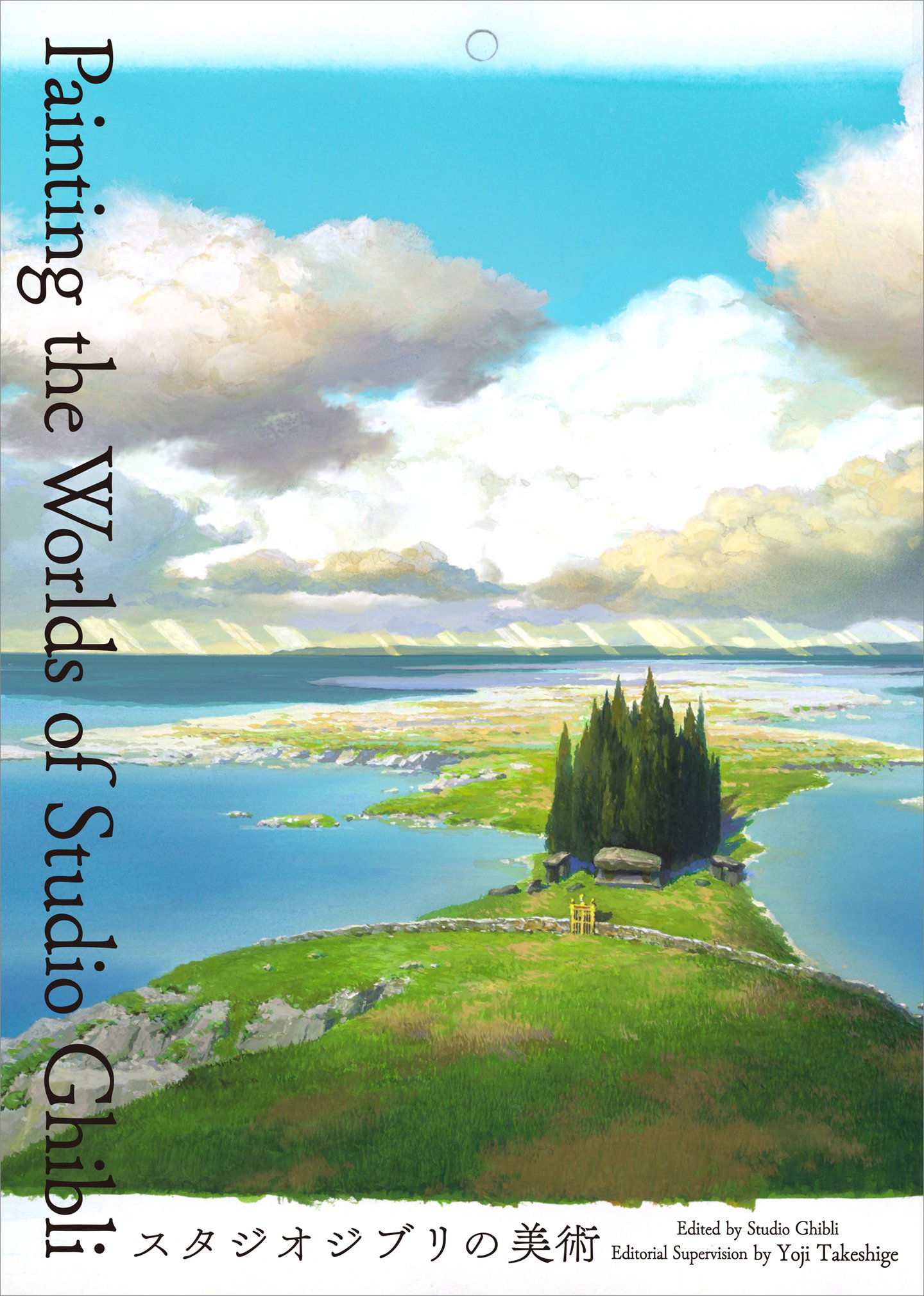
It’s Nice That (INT): Tell us about your role at Studio Ghibli, and how your career has evolved to this point? How did you get into this line of work?
Yoji Takeshige (YT): I’ve loved movies since I was a child and when I was in high school, I became fascinated by the films of the American directors Stanley Kubrick, Martin Scorsese, and Ridley Scott, and Japanese films by directors Akira Kurosawa and Kenji Mizoguchi. When I was in my second year in art school, I found a job listing for an art department position at a film production company and went to the interview thinking it would be an art department for a live-action film, but it turned out to be an animation company. It was there that I first found out about a job called ‘background’. I thought I’d give it a try so I joined the company, but it closed down after just six months.
My first job was working on the background production of Royal Space Force: The Wings of Honnêamise (1987) at a company called Gainax, which I was introduced to when my first company closed down. The next film that I worked on was Studio Ghibli’s My Neighbor Totoro. From there, I joined Studio Ghibli and worked on background art. Princess Mononoke was my first feature film as art director. After that, I worked as art director on Spirited Away, Howl’s Moving Castle, Tales from Earthsea, The Boy and the Heron, and, outside of Studio Ghibli, I also worked on the director Mamoru Hosoda’s Summer Wars.
The job of an art director is different depending on the project and the director, but at Studio Ghibli, in my case, director Hayao Miyazaki expresses almost all of the film’s settings and worldviews through imageboards, storyboards, etc., so as art director, it’s up to me to decide the colours and atmosphere that will come next. First I draw what’s called a production imageboard, which shows the colour tone I want, and then have it checked by the director. Once he says it’s ok, I draw up a kind of instructions based on that, attach them to the layout, and then issue orders to the various staff members in charge of background art. Once an illustration is finished by each staff member in charge, I have it checked again by the director, and if there are any revisions based on our discussion, the art director will make adjustments or corrections based on what he wants. In this sense, art director is like a foreman.