
The Motor Neurone Disease (MND) Association is on a mission to “unlock opportunities” following its first brand refresh in over a decade.
“Our ultimate goal is getting to £50m [in income per annum] by 2030 and driving more research, more campaigning and more support,” says head of brand and marketing, Siobhan Gray. “Brand isn’t the only lever to that, but it is a really important one.”
The Motor Neurone Disease (MND) Association is on a mission to “unlock opportunities” following its first brand refresh in over a decade.
“Our ultimate goal is getting to £50m [in income per annum] by 2030 and driving more research, more campaigning and more support,” says head of brand and marketing, Siobhan Gray. “Brand isn’t the only lever to that, but it is a really important one.”
Having benefited from a “massive period of growth since 2019”, spurred on by the fundraising of Rugby League legend Rob Burrow, the charity kicked off its rebrand in November 2024 by surveying almost 5,500 people.
To reach its £50m target, Gray knew the charity’s brand would be “a key lever for growth”, meaning it was time to make it fit for purpose. She reflects that in the past, the brand had acted “as a handbrake” and that needed to change.
“We knew that we needed to better reflect who we are as an organisation, which is driving change and being urgent,” says Gray.
She notes that while the community had affection for the old brand, there was “confusion” around the breadth of what the charity covers.
Some 3,000 respondents to the market research said they wanted the MND Association to be more “urgent” and “dynamic”, meaning the first step was to assess the “brand personality”. After that the team moved onto the visual aspects of the brand, admitting the old iteration “wasn’t designed with digital in mind”.
I really hope this new brand is going to unlock opportunities for us. No matter where you are in the charity, people will be able to use the brand to do that.
Siobhan Gray, MND Association
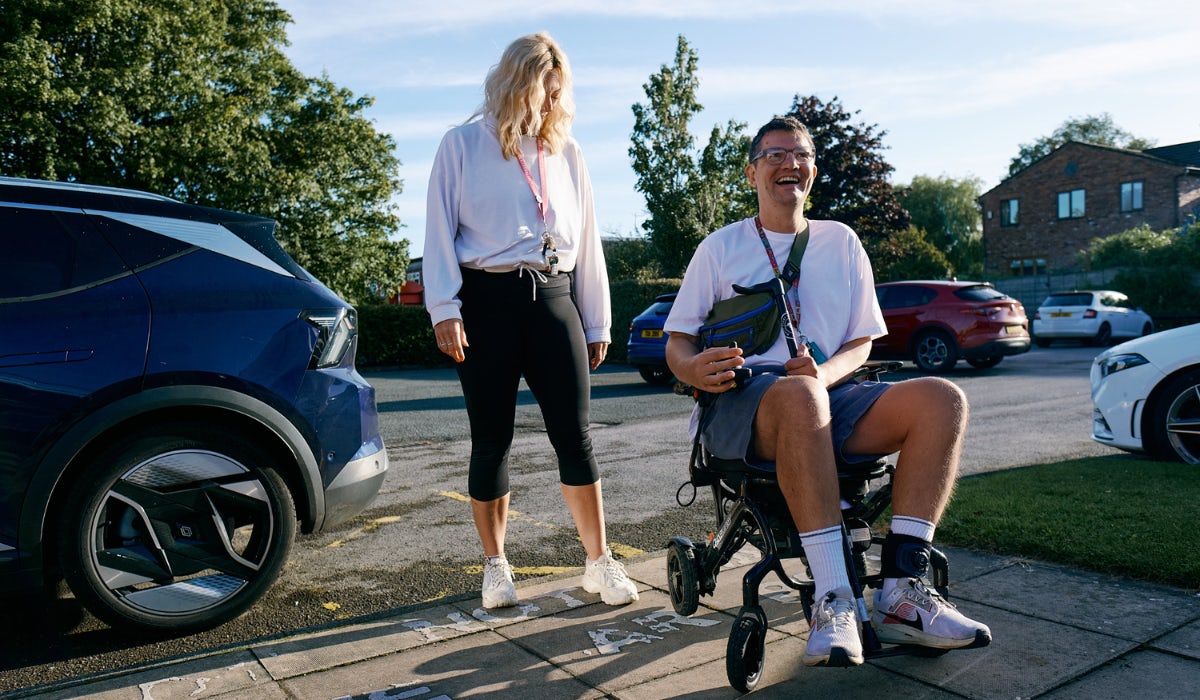
Part of the rebrand process included the launch of a short film ‘Every Day Matters’, designed to capture the community in an authentic way by featuring real moments sent in from MND patients.
From a visual perspective, the rebrand has involved a new logo, fresh colour scheme and fingerprint imagery embedded in the logo to represent the differing experiences of every individual with MND. There are six variations of the fingerprint to represent the six people diagnosed with MND everyday.
The logo is the “cherry on top” of the brand work, informed by a survey of 2,000 people which found the old logo “didn’t connect with new audiences”. The new logo is now also AAA accessible according to the Web Content Accessibility Guidelines.
Getting the project off the ground in the first place was a challenge, although the charity was lucky enough to find a corporate partner which covered the cost of the rebranding.
‘A fresh opportunity’: Charities on the rule change set to drive a ‘£290m donation uptick’
The executive leadership team gave the rebrand their full support, seeing it as a “priority”, with the 10-strong marketing, brand and digital engagement team taking the lead.
Having previously held marketing roles in the FMCG and food sectors at the likes of Henkel and Kerry Foods, Gray moved into the charity sector a decade ago, previously working at Tommy’s and The Brain Tumour Charity. She explains the sector combines her “love of brand building” with a “real sense of purpose”.
Within charity brands, she feels purpose is “baked into the brand”, whereas in other sectors you need to “find that purpose”.
“This is my third charity and I’ve got a real interest in medical disease areas where there’s almost a sense of no hope, and actually we need to drive the research to bring that hope to the community,” says Gray.
“The charity sector is really innovative at making use of what it’s got. We don’t typically have the same budgets as a lot of the people in other sectors. So, it’s about being really smart about how you spend.”
Looking ahead
In terms of measuring effectiveness, the charity is looking at whether its community finds the brand “dynamic”, “fast forward” and “unapologetically out there”.
“Does our brand hold attention for all those people who are fundraising for us and wearing our T-shirts? Do they feel they are proud of the brand and the brand is working for them in terms of getting people interested, and aware of both the cause and of the association?” asks Gray.
The team are now focused on growing awareness of the charity using the new brand to attract new supporters and increase their propensity to donate.
A piece of segmentation work is also taking place within the fundraising teams to define the targeting approach, as the charity looks to explore the channels where its new supporters are, such as social media. Being a membership organisation, with 84 local branches all with their own social media and micro sites, the MND Association has also kept the whole community updated on the rebrand and the approach they should take to content.
The team ran a volunteers’ webinar before the launch of the rebrand and kept them engaged throughout to get the whole community’s thoughts on the work, treating volunteers across the country as “an extension” of the staff.
We don’t want to be doing a new brand again any time soon. This has to be fit for a long time into the future.
Siobhan Gray, MND Association
“It’s about keeping them close to the project so that when you go out on social media, everybody’s singing from the same hymn sheet. Everybody understands the brand, understands what the brand is there to do and is trying to do. If you’re all on that same page, that’s when social media across all of those different channels is going to be effective,” says Gray.
The segmentation will also inform what content people see, whether that’s research, support or personal stories.
“A sense of connection is hugely important and we’ll continue to refine that content strategy and continually be faster at adapting as we go,” says Gray.
To build upon its recent work, the MND Association is also launching its new research strategy this week to “re-engage” supporters with the new brand. The team also hope to “unlock conversations” with “new corporate partners” in a bid to access new revenue streams and fundraising opportunities.
“I really hope this new brand is going to unlock opportunities for us. No matter where you are in the charity, people will be able to use the brand to do that,” says Gray.
“We don’t want to be doing a new brand again any time soon. This has to be fit for a long time into the future. In five years time, I really see us having driven a huge kind of programme of awareness and really helping at every aspect of that marketing funnel.”