
Games designed around AI are no longer a future problem hovering in the periphery. They’re here, they’re playable, I’ve seen one, and they’re starting to show intent. Bobium Brawlers, Studio Atelico’s debut iOS game, is one of the first I’ve seen that’s unashamedly AI-first, where players create content from prompts, and that alone makes it feel oddly brave.
This isn’t a tech demo hiding behind buzzwords, but it’s also not a AAA blockbuster trying to smuggle AI into a familiar formula. It’s a small, mobile PvP game built to prove a point: that a game with generative AI at its heart can actually work. In doing so, it hints, quietly, at what comes next. (Read how artists are actually using AI in workflows for more.)
You may like
Creature cards are generated from text prompts, including abilities, stats and attacks. (Image credit: Studio Atelico)
A traditional approach to something new
Instead of selecting traits or stats, you describe a creature in text and watch the game turn that idea into something playable; a creature-card that’s visually distinct, mechanically viable, and immediately yours. That generation moment is genuinely impressive. It’s also where the game’s ambitions are clearest, and its contradictions easiest to spot.
Studio Atelico isn’t pretending this is a AAA experiment. This isn’t a $200m production trying to replace designers with prompts. It feels closer to how games once adopted middleware like Havok, a focused system that enables new kinds of interaction. The Atelico AI Engine runs natively on device GPUs and, beyond creature generation, is designed to simulate NPCs that remember actions and respond in more believable ways.
That broader vision doesn’t fully surface in Bobium Brawlers, but you can feel it pressing against the edges. What’s here is constrained, but it teases a future where AI doesn’t just generate characters but entire lives, systems, and simulations with unsettling realism.
Combat is traditional, not game-changing. It remains to be seen if AI-generated cards are workable. (Image credit: Studio Atelico)
The card battles themselves are fine, but unmistakably conservative. This is me-too design doing a lot of structural heavy lifting for something far more experimental, working behind the scenes. That feels deliberate, particularly given how easy it could be to generate cards and decks that break the balance of the game, as well as give bad actors a new place to offend. When you hand players tools that powerful, guardrails matter.
The team talked at length during my demo about control – visual, mechanical and behavioural. The AI doesn’t endlessly retrain itself on whatever players produce; instead, generated creatures are reviewed internally, stylistic filters are strict, and reporting systems exist to prevent things from drifting into the inevitable bad behaviour that we humans bring to any game that lets you get creative.
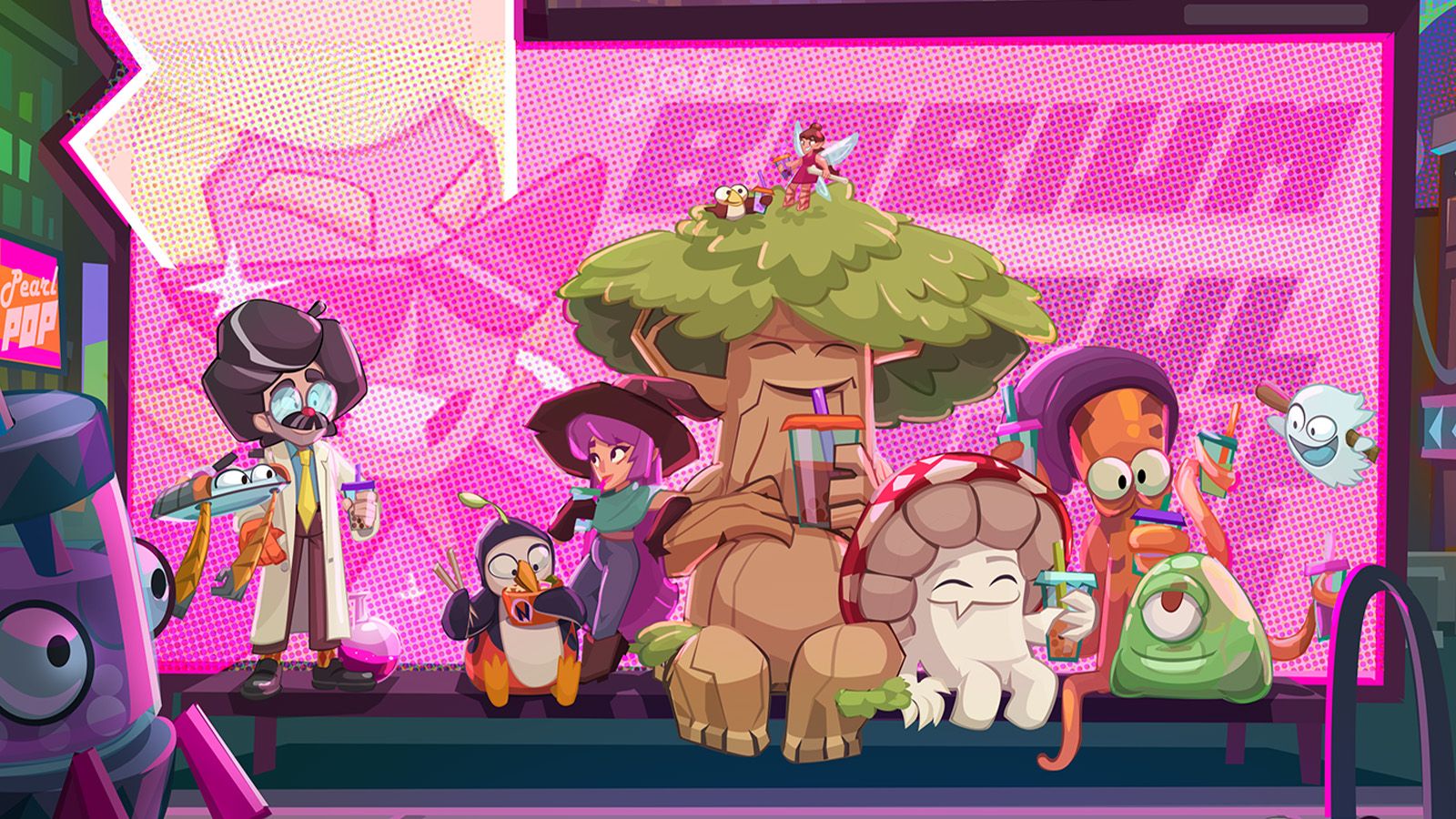
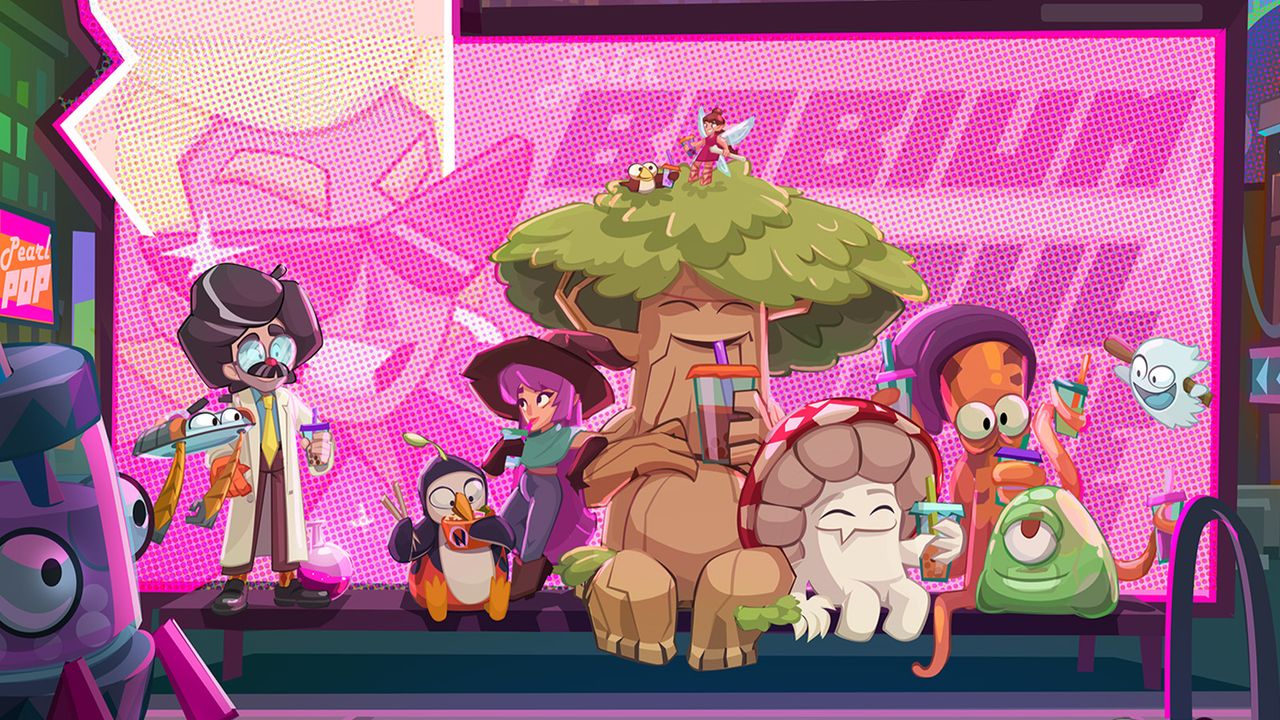
Creature designs are AI generated, but there’s a team of human artists defining the style. (Image credit: Studio Atelico)
It’s not replacing artists
Art director Mollie Boorman was clear that this isn’t about shortcuts. “It’s not about replacing parts of our pipeline or getting rid of creatives,” she said. “There’s more to making assets than just content.” In her view, the AI exists to enhance gameplay, not to erase the work behind it, and she’s keen to point out that there’s a team of artists behind the style guides the AI taps into for its creations. She also laughs and points out the flaws of gen AI; its penchant for hallucination is why the team settled on a cartoon style, where multi-eyed, straw-fingered creatures make sense.
The issues surrounding AI and its ethical use naturally came up repeatedly during the demo. CEO and co-founder Piero Molino was refreshingly blunt about why AI has become such a flashpoint. “What people are opposed to is not actually AI,” he argued, “but the exploitation of people.” The point didn’t feel defensive so much as corrective: players aren’t angry about tools, they’re angry about how those tools have been used. Or at least where the AI tools have come from and why jobs are being removed from game development.
You may like
To Atelico’s credit, the studio has backed up its ‘ethica AI use’. As mentioned, the studio has hired real human artists to define and maintain the game’s core style, but also revealed to me that those artists are paid royalties on the generations their work enables. That doesn’t magically solve the wider industry problem, but it does show an awareness that’s often missing from AI-driven pitches.
What Bodium Brawlers does show, is gen AI can be used in game design. (Image credit: Studio Atelico)
Is it new, really?
On the technical side, the game also avoids some obvious traps. Most AI processing happens directly on the device using Apple’s Neural Engine, rather than relying on expensive cloud infrastructure. It’s efficient, scalable, and quietly sensible, not the kind of detail that excites players, but exactly the kind that determines whether this approach survives in the longrun, particularly as costs, both financial and ecological, are rising with greater AI use.
The upshot is that Bobium Brawlers isn’t especially new as a game. Strip away the AI generation layer, and you’ve seen this idea before. But that layer matters. Its character creation system feels like a real-world use of AI that supports game design, one that, while functionally a randomised character creator on steroids, has the cachet of being truly unlimited.
This isn’t the fully formed future of games. It’s a glimpse, albeit imperfect, constrained, and cautious, of how AI might sit inside game design without flattening it. If Bobium Brawlers snowballs into something bigger, it won’t be because of its card battles; it’ll be because it treated AI less like a spectacle and more like a feature, a tool that players can actually have fun with.
Visit Studio Atelico for more on the team’s ‘Atelico AI Engine’.