
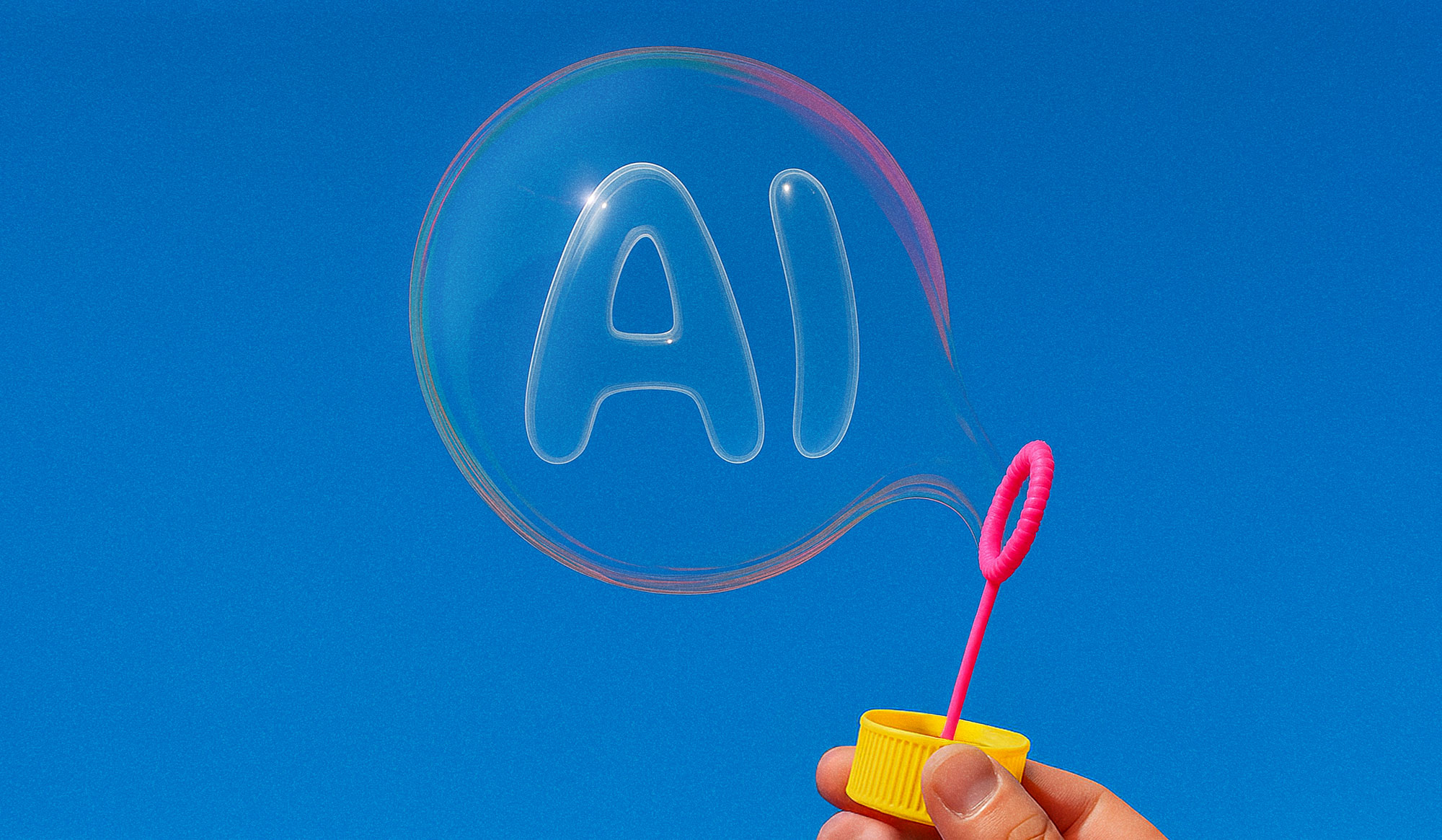
The real risk of generative AI for marketers isn’t bad creative. It’s the rise of the “just good enough” economy.
If that wasn’t already clear, Disney’s deal with OpenAI last week brought it into sharp focus.
Yes, the headlines fixated on the billion dollar investment. Yes, there was plenty of speculation about why Disney chose OpenAI over Google, which it is now suing over alleged copyright infringement. Those are fair questions, and they matter.
But they’re not the most important ones – at least not for marketers.
The bigger story is what this deal signals about where the economics of content, advertising and attention are heading. Disney didn’t partner with OpenAI to make better creative. It partnered with OpenAi to make average creative work at massive scale.
That distinction is critical.
Before getting there, a quick recap. Disney agree to license more than 200 characters across Marcel, Pixar, Star Wars and its classic catalogue into OpenAI’s generative systems including Sora and ChatGPT’s image tools. In return, Disney took an equity stake in an exclusive partnership. The dollar figure grabbed the headlines. The intellectual property is the real currency.
What OpenAI gets is obvious. As generative AI capabilities converge and model quality becomes table stakes, differentiation shifts elsewhere. Exclusive content creates stickiness. Familiar characters do emotional work that generic output can’t. They make people want to stay, experiment and create.
What Disney gets is less about immediate revenue and more about positioning. This is a company that has spent a century extracting value from intellectual property by controlling where, when and how it appears. Now. its placing that IP inside systems built for speed, volume and iteration.
That is where marketers should stop and think.
The conversation around generative AI has largely been framed around efficiency – faster production, cheaper video and more output. That framing understates what’s actually changing. Not primarily a production shift – it is a shift in how meaning circulates.
When characters and mascots are allowed to live inside generative systems, they stop being event-based and start becoming environmental, said James Kirkham, co-founder of brand consultancy Iconic. They can appear anywhere, in any tone, next to anything. They move faster. They show up more often, he added.
That scale is appealing, it is also destabilising.
“The bigger threat for me isn’t low-quality AI output, but more the normalisation of ‘just good enough’ creative at massive volume,” said Kirkham. “Tools like Sora make it easy to clear the first three seconds of attention without real craft behind it. Over time that will in turn train unsuspecting audiences to expect less too, so everything becomes a little expected and samey and noisey and it erodes the premium layer where agencies and brands have historically competed.”
Brand assets derive their power from context. Historically, they appeared deliberately, within carefully staged narratives that reinforces authority and intent. Generative systems dissolve those guardrails. Context becomes optional. Frequency increases. Specificity erodes.
This is where the “just good enough” economy becomes a real risk.
‘Clients should be asking which work still deserves time, money and above all, actual human judgement, or which is deliberately disposable,” said Kirkham.
The loudest criticism of AI-generated content has been artistic – too generic, too synthetic, too samey. The shorthand of “AI slop” captures the vice but misses the mechanism.
The real shift is economic. Generative AI dramatically lowers the barrier to producing content that is watchable enough to hold attention. Not great content. Not distinctive brand storytelling. Content that functions. Content that clears the first few seconds and keeps feeds moving.
At scale, that quietly retrains audiences. Expectations drift downward without anyone noticing. Content becomes more predictable, more interchangeable and nosier. Over time, the premium layer – where brands and agencies once competed on judgement, restraint and originality – thins out.
The threat is not low quality output. Bad creative is way to ignore. The threat is competent creative at massive volume becoming the default aesthetic.
Once that happens, brands are forced into a strategic choice.
Either characters and mascots become flexible assets designed to live inside invited, editable systems –fast, adaptive and disposable by design – or they remain cultural symbols that appear rarely and deliberately, said Kirkham. Both approaches can work. What is difficult is doing both for long.
“Once a character becomes more ambient, endlessly generated and context-free, it loses much of that original ownership and authority we been used to for decades,” said Kirkham. “It spreads at the speed of a meme. The job for brands now is to set rules before the platforms do, because once that line is crossed, it’s very hard to re-establish meaning.”
This is the context in which the advertising economics start to move.
For years, one of the biggest barriers revenging technology platforms from capturing a larger share of television advertising budgets is as content economics. Producing TV-quality programming is expensive, slow and culturally misaligned with companies built around automation and ionisation. Even streaming platforms that tried to replicate television inherited the same cost securities.
Generative AI changes that equation.
If viewing habits can be nudged toward AI-generated content – content that benefits from economies of scale rather than human labour – that barrier collapses. Content becomes a commodity input. The economics begin to trend cloud computing more than Hollywood production.
In that world, the goal is not to make the best work. It is to occupy time efficiently.
Two hours of daily viewing does not require two hours of premium storytelling. It requires two hours of frictionless content that clears a minimum attention threshold. Generative systems are already capable of doing this and they are improving quickly.
Should platforms successfully shift even a portion of viewing time toward AI-generative content they control – and then argue that advertising share should follow audience share – it opens the door to budgets historically reserved for television.
Opening the door to TV budgets is only the first order effect. The second-order effect is more consequential.
Once platforms are rewarded for occupying time efficiently, not for producing distinction, brand meaning becomes an input rather than an outcome.
The “just good enough” economy starts to feed on recognizable systems – borrowing their equity to make average content acceptable at scale.
Numbers to know
$2 billion: Total sales X has achieved for the first nine months of 2025
30,000: Total number of viewers during the peak of Kim Kardashian’s Skims TikTok Live show
2029: The year when the Oscars ceremony will move from broadcasting on ABC to YouTube exclusively
$100 billion: The amount of funding OpenAI is hoping to raise from a wider pool of investors to help it continue running and training its AI models.
What we’re reading
Meta tolerates rampant ad fraud from China to safeguard billions in revenue
The tech giant itself calculated that 19% of the money it received from Chinese companies in 2024, more than $3 billion in terms of numbers, came from ads for scams, illegal gambling, pornography and other banned content according to Reuters.
OpenAI Has Discussed Raising Tens of Billions at Valuation Around $750 Billion
The AI platform held early chats with investors about raising as much as $100 billion, which if successful, would add to its huge cash stockpile needed to train and run its AI models, according to The Information.
TikTok Live Shopping Catches on in US With Kim Kardashian and Cookies
Kim Kardashian’s loungewear brand Skims heading to TikTok Live gave the format even more legitimacy – at its peak, 30,000 TikTok users tuned in to watch the reality star’s first live shopping event as orders rolled in, according to Bloomberg.
Oscars heading for YouTube after more than 50 years on ABC
After more than half a century of being broadcast on ABC, the Oscars ceremony has signed a deal for YouTube to have the exclusive global rights to broadcast the event, as well as pre-show and behind-the-scenes content between 2029 and 2033 — indicating the shift in viewing patterns from linear TV to streaming platforms, according to Axios.
What we’ve covered
Why Pinterest wants to buy tvScientific, and what it signals for the CTV ads business
Following the launch of its self-serve ad platform Performance+, Pinterest now sees the opportunities in extending its performance-based ads into connected TV.
‘This isn’t the old pre-roll world’: YouTube has been talking TV — now it’s selling that way
As YouTube continues to dominate watch time and video, it continues to go after TV budgets. But lately, how it does that, has shifted.
At Ebiquity, a new role signals marketing’s shift from metrics to meaning
Nick Pugh has taken on the role of chief marketing effectiveness officer, which is responsible for helping advertisers decide earlier what success could look like and what signals should actually guide decisions.
‘There’s tremendous opportunity’: NBA sponsorships lead on European expansion
Digiday caught up with NBA’s vp, global partner management group lead David Brody about the league’s strategy to draw in sponsors, how it’s meeting their expectations and about seizing the momentum in Europe.