
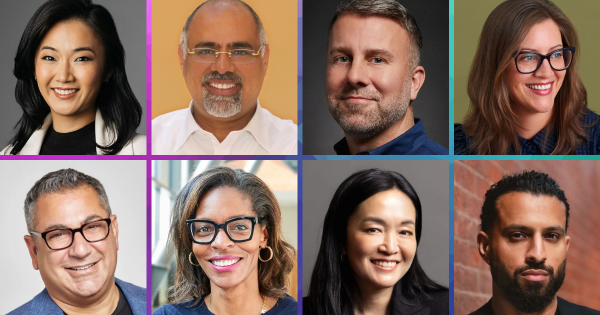
2025 was another busy year for marketing headhunters and corporate HR teams.
The last 12 months have seen new chief marketing officers (CMOs) take the reins at giants like McDonald’s and Mastercard, while others, including the National Basketball Association (NBA) and Poppi, are currently without dedicated CMOs.
Some companies, such as tech challenger Nothing and Cadillac F1, hired their first CMOs, gearing up for a new chapter in 2026.
If you’re struggling to keep pace with all the change, or need a reminder of who has landed where, ADWEEK has rounded up some of 2025’s biggest CMO firsts, exits, and shuffles.
Keep scrolling to see the moves that shaped the year.
Biggest Exits
Tariq Hassan, McDonald’s
What changed? Longtime McDonald’s USA chief marketing and customer experience officer, Tariq Hassan, resigned from his role in early 2025. He was succeeded by Alyssa Buetikofer, CMO of McDonald’s Canada. In his four years at the fast-food giant, Hassan oversaw major campaigns including “Fan Truths” and the viral revival of Grimace.
Why it matters: Hassan departed at a turbulent time for the business. In the third quarter of 2024, McDonald’s posted its biggest global sales decline since 2020. It also needed to restore its reputation as a value destination and win back trust after an E. coli outbreak in late 2024. While sales have since grown, McDonald’s still has work to do in “re-engaging the low-income consumer,” CEO Chris Kempczinski said in an August earnings call. –Brittaney Kiefer
Tammy Henault, NBA
What changed? When the NBA recruited Tammy Henault in 2022, it charged her to “further the organization’s mission to inspire and connect people everywhere through the power of basketball.” That big remit came to an end in September, when Henault exited to take a “power pause” before her next move.
Why it matters: Henault’s plays were fun to watch, especially her penchant for casting NBA stars present and past (see: Larry Bird, Magic Johnson) alongside mainstream celebs like Jimmy Kimmel and Queen Latifah. Henault also oversaw the organization’s first piece of sonic branding. She turned younger viewers onto basketball, built the NBA’s overseas fanbase, and shattered attendance records along the way. The NBA is splitting marketing between the leadership team for now. – Robert Klara
Raja Rajamannar, Mastercard
What changed? Longtime Mastercard chief marketing and communications officer Raja Rajamannar announced in October that he would transition to the role of senior fellow and be succeeded by former Accenture marketing boss Jill Kramer. Rajamannar had been in the role for 12 years.
Why it matters: One of the industry’s most celebrated CMOs, Rajamannar is credited with transforming the financial services giant into a marketing and data-led organization while evolving its iconic “Priceless” platform. He also expanded Mastercard’s brand with sonic and haptic logos and pushed the boundaries of inclusive marketing with groundbreaking programs like the True Name card. His legacy looms large for CMOs at legacy brands looking to innovate beyond the confines of traditional marketing. – Alison Weissbrot
Andy Judd, Poppi
What changed? Poppi CMO Andy Judd stepped down in 2025 following PepsiCo’s roughly $2 billion acquisition of the prebiotic soda brand.
Why it matters: Having first joined in 2023, Judd helped shape Poppi’s culture-first marketing approach as the brand scaled rapidly in retail. Poppi has not named a direct replacement, but marketing responsibilities are being overseen by CGO Jeff Rubenstein as the brand integrates into PepsiCo. Judd’s exit marked a key transition as Poppi moves from fast-moving challenger to a scaled-up CPG. – Rebecca Stewart
Linda Bethea, Danone
What changed? In a multinational as big as the $16 billion Danone, a ripple at headquarters can become a wave in the field. That’s what happened earlier in December when Linda Bethea departed as North America CMO after roughly two years on the job.
Why it matters: In 2022, Paris-based Danone announced Renew Danone, an initiative that fractioned its operations into three sectors. In this shift, Henri Bruxelles emerged as the exec overseeing the Americas division. Afterwards, Bethea was headed for the exit, and the CMO responsibilities were rolled into the broader U.S. leadership team. The packaged-foods giant had built its messaging around the ethos of “health through food” for the last two decades. However, it was Bethea who spotted the market niche created by the rise of GLP-1 drugs for weight loss, positioning Danone’s yogurt-based products as essential nutritional supplements. – Robert Klara
Lisa McKnight, Mattel
What changed? After more than two decades at Mattel, evp and chief brand officer Lisa McKnight left, and a leadership restructure followed. The Barbie brand architect’s role was replaced by a newly created chief global brand officer position, occupied by Roberto Stanichi.
Why it matters: McKnight helped lead Mattel’s transformation into an IP-driven entertainment behemoth, capped by the cultural and box office success of the Barbie movie. Her exit signals a shift toward more centralized global brand leadership as Mattel looks to scale more franchises across film, consumer products, and experiences. – Rebecca Stewart
Michelle St. Jacques, Molson Coors
What changed? Not quite a CMO move, but it was still big industry news when Molson Coors announced that Michelle St. Jacques would exit her role as chief commercial officer in late 2025 as part of a broader leadership restructuring.
Why it matters: Though not a marketer by title, St. Jacques oversaw marketing, innovation, and sales strategy during a period of significant category pressure. Her responsibilities will be redistributed internally, with no direct replacement named. The shuffle shows how the legacy beer brand is rethinking marketing as consumer habits shift and sales slide. – Rebecca Stewart
Charisse Hughes, Kellanova
What changed? Kellanova’s chief growth officer (CGO) Charisse Hughes, is leaving the company on Dec. 24 following Mars’ acquisition of Kellanova. A company spokesperson declined to say who will direct the marketing initiatives for Kellanova’s brands following Hughes’ departure.
Why it matters: Like many businesses, Kellanova continues to battle through numerous external factors, like consumers spending less or trading down to cheaper, private-label brands. In an October earnings release, CEO Steve Cahillane acknowledged this “cyclical downturn,” but noted that Kellanova had beat its own expectations due to a growth strategy based on “innovation, productivity, and emerging markets expansion, notably noodles in Africa.” Analysts and investors will be watching the business and its brands closely now that the Mars integration is complete. – Rebecca Stewart
Biggest Moves
Joon Silverstein, Coach
What changed? In January, Coach elevated Joon Silverstein to CMO. She succeeded Sandeep Seth, who serves as CGO at parent company Tapestry and added president of Tapestry International to his title.
Why it matters: A decade-long Coach veteran, Silverstein had already led campaigns that modernized Coach’s image, connecting it with Gen Z while driving digital growth, including sub-brand Coachtopia. Her hire showcased the brand’s commitment to balancing heritage luxury with a contemporary, global audience. – Rebecca Stewart
Josh Line, Yahoo
Josh Line comes to Yahoo after 14 years at Paramount.
What changed? Yahoo turned 30 this year, and the web’s first big search engine marked its birthday with a spate of colorful activations, including a memorable (if baffling) Super Bowl spot starring Bill Murray. Then, as if the marketing team didn’t have enough to do already, it got a new boss in March. Josh Line filled a CMO office left empty since Tressie Lieberman split for Starbucks the previous fall.
Why it mattered: Line spent close to 14 years climbing the marketing ladder at Paramount, having already cut his teeth on the agency side. Yahoo gave him plenty to do from day one, including leading the effort to turn more Gen Zers on to email and boosting awareness of content hubs Yahoo News, Yahoo Sports, and Yahoo Finance. In a statement, Line pledged to “reignite love” for the brand. – Robert Klara
Rebecca Van Dyck, Airbnb
What changed? In June, Airbnb named former Meta and Levi’s exec Rebecca Van Dyck as CMO, while former marketing lead Hiroki Asai took on the new role of chief experience officer.
Why it matters: The CMO job at Airbnb had been vacant since 2018, when its first CMO, Jonathan Mildenhall, departed after four years. Van Dyck’s arrival dovetailed with Airbnb’s move to become about “more than just stays.” Founder and CEO Brian Chesky wants the business to evolve into a travel and lifestyle platform, and Van Dyck will be tasked with leading the brand into that next chapter. – Rebecca Stewart
Megan Imbres, Peloton
Megan Imbres is Peloton’s chief marketing officer (CMO).
What changed? In June, Megan Imbres became Peloton’s fourth CMO since 2020. The former Apple, Amazon, and Netflix exec replaced Lauren Weinberg, who left in April after the marketing and comms functions were split.
Why it matters: Peloton has had a challenging few years, but in Q3 it surprised Wall Street by posting a profit despite falling subscriber numbers and a 37% cut to its marketing budget. We’ve not seen a tentpole creative campaign from Imbres yet, but 2026 might be the year. – Rebecca Stewart
Nicole Hubbard Graham, Nike
Nicole Hubbard Graham previously spent 17 years in Nike’s marketing team, before co-founding Adopt agency with David Creech and Rich Paul.
What changed? Nike reorganized its consumer, product, and brand leadership department into three distinct areas: consumer and sport, marketing, and product creation. As part of that reshuffle, CMO Nicole Hubbard Graham added evp to her title, charged with leading storytelling for the Nike, Jordan, and Converse brands.
Why it matters: Hubbard Graham is part of the team racing to turn around Nike’s business after years of sluggish sales and heated competition from upstarts like On and Hoka. After leading Nike’s return to the Super Bowl in Feb. 2025, she took an even bigger risk. In September, Nike reimagined its “Just Do It” slogan as “Why Do It?” to reach Gen Z, marking one of its most significant brand campaigns in years. –Brittaney Kiefer
Jon Halvorson, Tylenol
What changed? Sometimes you need a marketer, and sometimes you need a warrior. In October, Tylenol maker Kenvue needed both, and Jon Halvorson got the call.
Why it matters: Kenvue was reeling after a September press conference in which health secretary Robert F. Kennedy, Jr.—buttressed by President Trump—implied a link between autism and acetaminophen, the active ingredient in Tylenol. Despite the medical establishment long discrediting such links, Kenvue took no chances. With experience spanning Starcom MediaVest, GM. and Mondelez—where he led AI adoption—Halvorson brings the marketing and messaging chops needed for the challenge ahead. The same day Kenvue reported Q3 sales down 3.5%, Kimberly-Clark announced it had acquired Kenvue for nearly $49 billion. – Robert Klara
Colleen DeCourcy, Sonos
What changed? On an earnings call in November, beleaguered tech company Sonos announced it will bring on marketing and Madison Avenue veteran Colleen DeCourcy in January to lead a brand turnaround. The appointment comes as Sonos continues to recover from a botched app update in 2024, which cost it $100 million in revenue in the following six months and sent its stock tumbling.
Why it matters: Sonos is betting DeCourcy, with her pedigree at companies like Snap Inc. and Wieden+Kennedy, can repair the brand’s image with a revamped marketing strategy that shifts the focus from adding new customers to increasing the number of devices in each customer household. She joins under new CEO Tim Conrad, who came on in July to turn around the struggling company’s fortunes. – Alison Weissbrot
First CMO appointments
Ahmed Iqbal, Cadillac F1
What changed? Cadillac F1 recently named former TikTok and Twitter exec Ahmed Iqbal as its first CMO.
Why it matters: Iqbal’s appointment lands as the buzz around motorsports hits a fever pitch, thanks to Netflix’s Drive to Survive and a nail-biting Grand Prix season. In a statement, Cadillac said Iqbal’s mission will be to turn the new racing team into “America’s home team” with a strategy that will not “rely solely on traditional advertising or glossy sponsorships.” Before long, he could be giving McLaren a real challenge in the marketing races. – Rebecca Stewart
Charlie Smith, Nothing
Smith arrives from Loewe where he was CMO for seven years.
What changed? To bookend the year, tech challenger Nothing has appointed Charlie Smith as its first chief brand officer. He joined from LVMH brand Loewe, where he has spent the last seven years as CMO leading cool projects including dressing Rihanna for the Super Bowl.
Why it matters: London-based Nothing styles itself as an alternative to Apple and Samsung, manufacturing sleek smartphones, watches, and audio accessories. Since 2020, it’s raised $200 million in funding, and it’s preparing for its AI-powered future. Now it’s banking on Smith to help it challenge the status quo. – Rebecca Stewart
CMOs to the C-Suite
Diana Haussling, Hello Products
What changed? Diana Haussling became the latest marketer to step into the CEO office in February, moving from her role as senior vp, general manager, consumer experience and growth, and CMO for North America at Colgate-Palmolive to lead Hello Products.
Why it matters: Buzzy startup Hello, which sells “naturally friendly” toothpaste, mouth rinse, toothbrushes, and floss, was founded in 2013 and acquired by Colgate in 2020. Haussling’s move mirrored a trend of CMOs becoming CEOs, and set the tone for more of the same in 2025. – Rebecca Stewart
Soyoung Kang, EOS
Kang first joined Eos in 2018.
What changed? In September, EOS Products chief marketing and innovation officer, Soyoung Kang, was promoted to president of the personal care brand. The new role, which she assumed after seven years as CMO, has her continuing to oversee marketing, innovation, and e-commerce, while adding commercial strategy, business performance and P&L growth and profitability to her responsibilities.
Why it matters: Kang is behind EOS’ meteoric rise from a small challenger brand best known for its orb-shaped lip balms to a Gen Z cult favorite on social media, with products across skincare, beauty, and shaving. Her promotion follows 14 consecutive quarters of double-digit retail sales growth for the business, proving that there is a path to company leadership for CMOs who drive results. – Alison Weissbrot
Jackie Jantos, Hinge
Jantos joins a school of CMOs who stepped into more senior C-Suite roles in 2025.
What changed? In December, Match Group-owned dating app Hinge promoted chief marketing officer and president Jackie Jantos to CEO. She succeeds founder Justin McLeod, who left to launch an AI-powered dating app. Tamika Young, who’d been with the business since 2023, took on the expanded role of chief marketing and communications officer.
Why it matters: In her four years at the company, Jantos helped Hinge buck a sector-wide decline and cement the app’s reputation for facilitating meaningful connections. She oversaw expansions of Hinge’s “Designed to Be Deleted” platform and told real love stories through innovative projects such as a romantic zine, book club activations, and a Substack series. Her elevation to the top job shows her strategy is working. –Brittaney Kiefer